

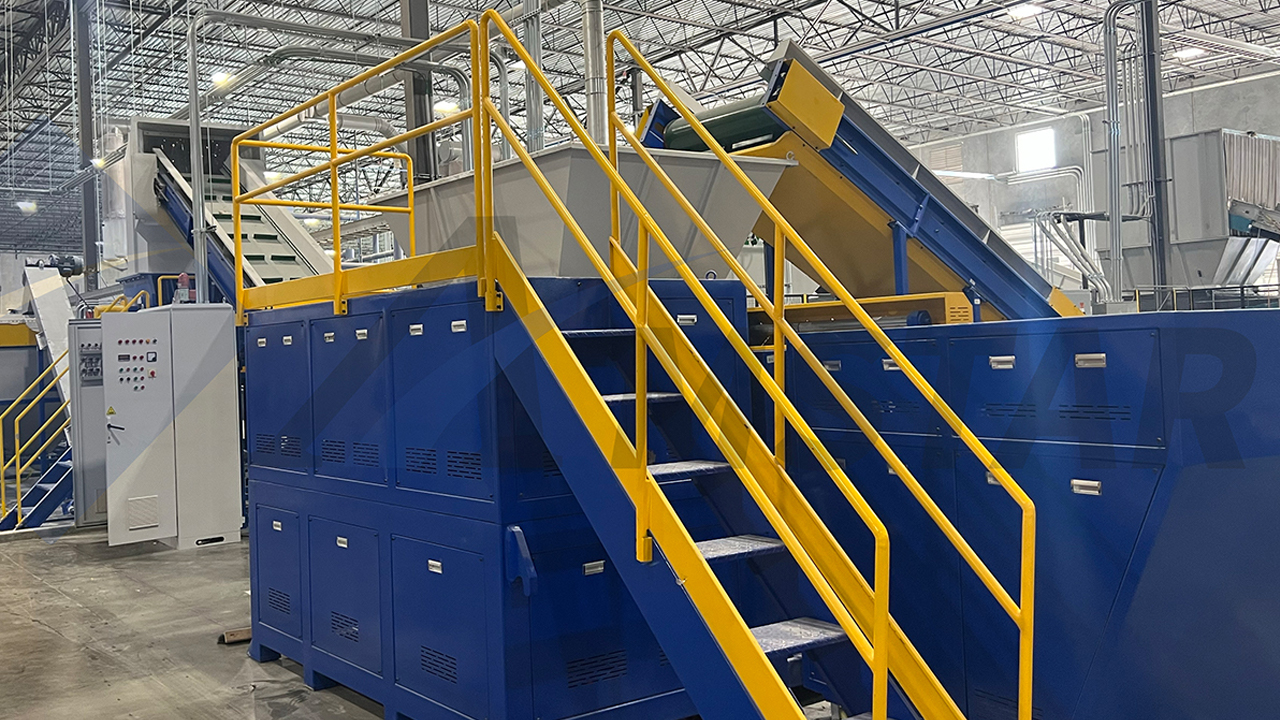
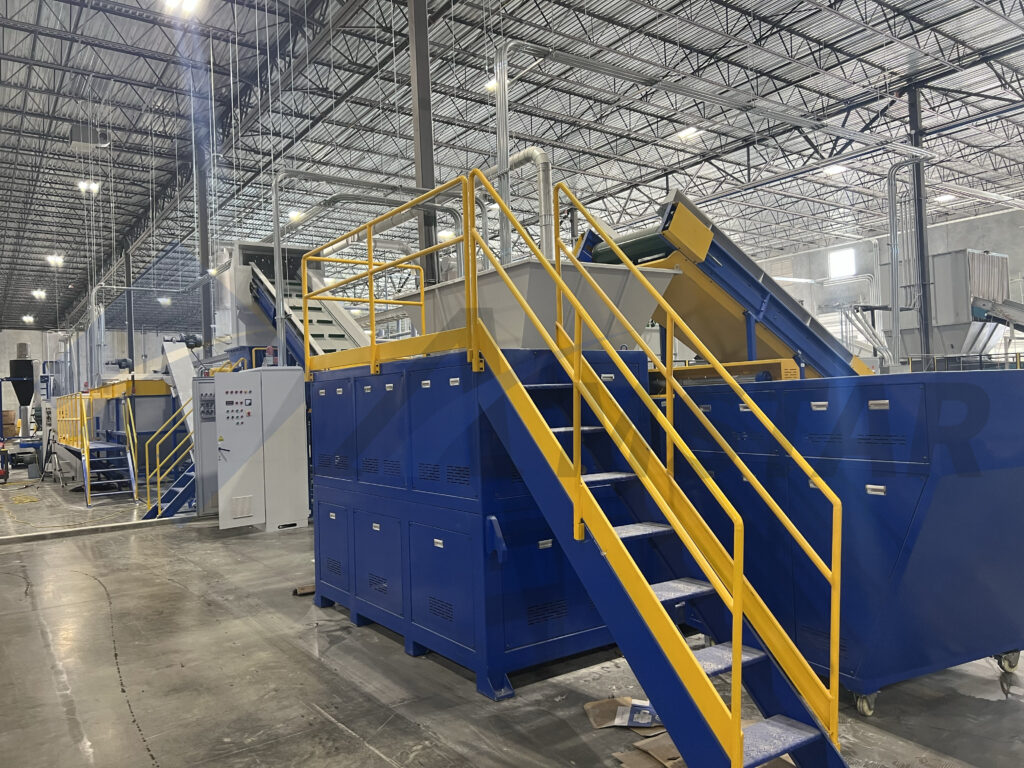
In plastic recycling systems, shredders are often described as machines that “make material smaller.” This description is technically correct—but strategically incomplete. A plastic shredder’s real role is volume control and process protection, especially in modern, high-capacity recycling lines.
1. Shredding Is the First Step of System Stabilization
Unlike granulators, plastic shredders typically operate on:
- Bulky waste
- Irregular shapes
- Mixed or contaminated plastics
The goal at this stage is not precision, but control.
By breaking large plastics into manageable pieces, the shredder:
- Reduces material volume
- Creates uniform feeding conditions
- Protects downstream machines from shock loads
In this sense, shredding is a defensive process—it prepares the line for stable operation.
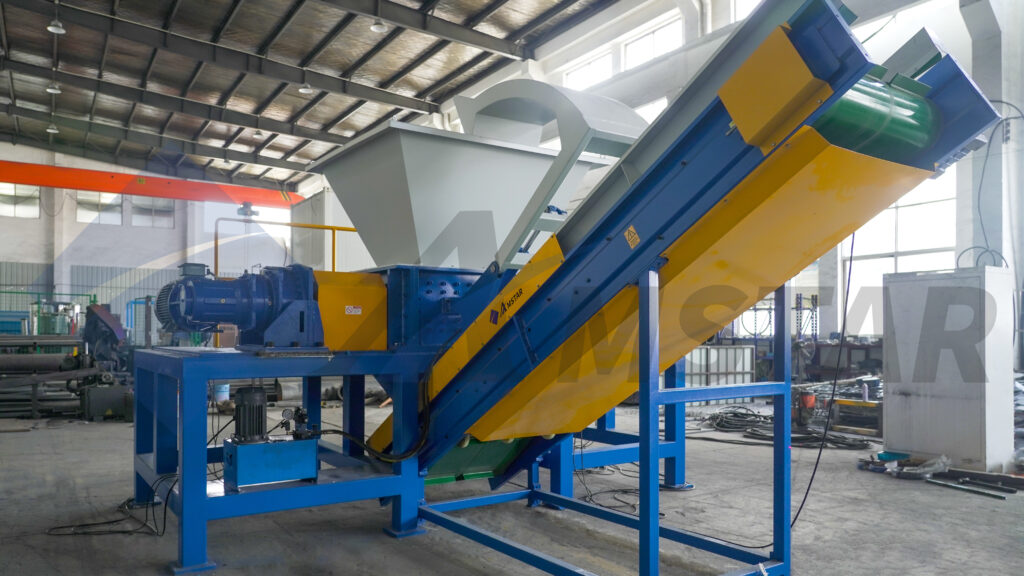
2. Why Shredders Focus on Torque, Not Speed
Plastic shredders work at low speed and high torque for a reason. This design allows them to handle:
- Thick-walled parts
- Hollow containers
- Pipes, crates, and injection rejects
- Materials with embedded metal or dirt
Low-speed shredding minimizes heat generation and reduces the risk of melting, making it ideal for pre-processing before washing or granulation.
3. Shredder Output Is About Shape, Not Final Size
Unlike granulators, shredder output is intentionally coarse.
What matters is:
- Whether material can be conveyed smoothly
- Whether it can be fed evenly into the next machine
- Whether bridging and blocking are avoided
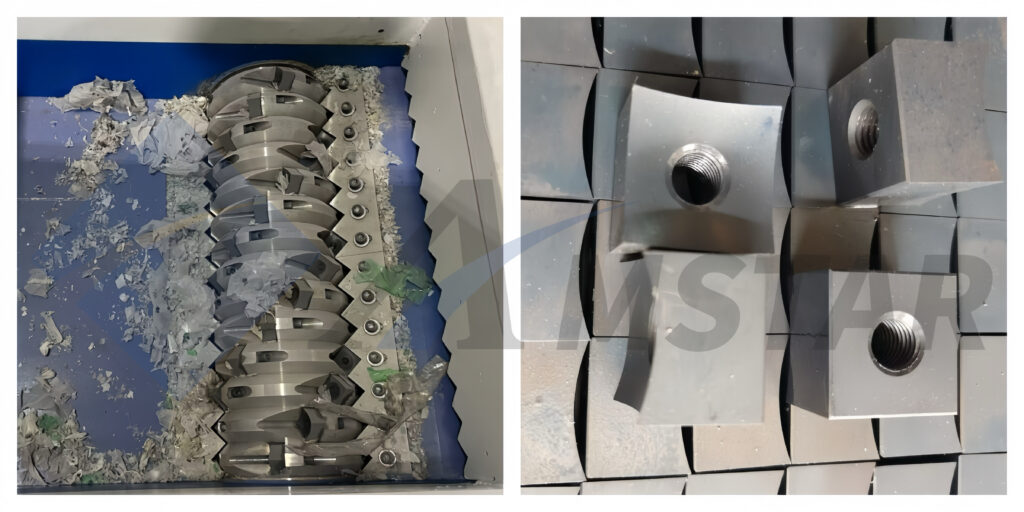
A well-configured plastic shredder produces pieces that are consistent enough to move, not fine enough to finish. This is why shredders are commonly followed by crushers or granulators in complete recycling lines.
4. Single Shaft vs Double Shaft: A Process Choice
Different shredder types serve different system roles.
| Shredder Type | Typical Use | Key Advantage |
| Single Shaft Shredder | Controlled output, cleaner material | Uniform discharge size |
| Double Shaft Shredder | Heavy-duty, mixed waste | Strong tearing capability |
| Four Shaft Shredder | E-waste, precision pre-shredding | Tight size control |
The choice depends less on capacity and more on material unpredictability.
5. Shredders Protect Granulators and Extruders
One overlooked function of a plastic shredder is risk reduction.
By pre-shredding material, the system:
- Reduces impact load on granulators
- Lowers blade wear
- Prevents sudden torque spikes
- Improves extrusion feeding stability
In many plants, adding a shredder upstream extends granulator blade life by a significant margin.
6. Shredders as Throughput Regulators
In automated recycling lines, shredders often act as throughput regulators.
With controlled feeding systems, they:
- Match line speed
- Absorb material variation
- Prevent downstream overload
Rather than pushing maximum output, an industrial plastic shredder helps maintain continuous, predictable flow.
Final Thoughts
Plastic shredders are not designed to finish the job—they are designed to make everything after them easier.
By controlling volume, absorbing shock, and stabilizing material flow, a shredder quietly determines whether a recycling line runs smoothly or struggles under stress.
In modern plastic recycling, shredding is no longer optional—it is process insurance.
Inquiries
To learn more about this product, please send us a message using the form below: