
1. What Is an Appliance Recycling Line?
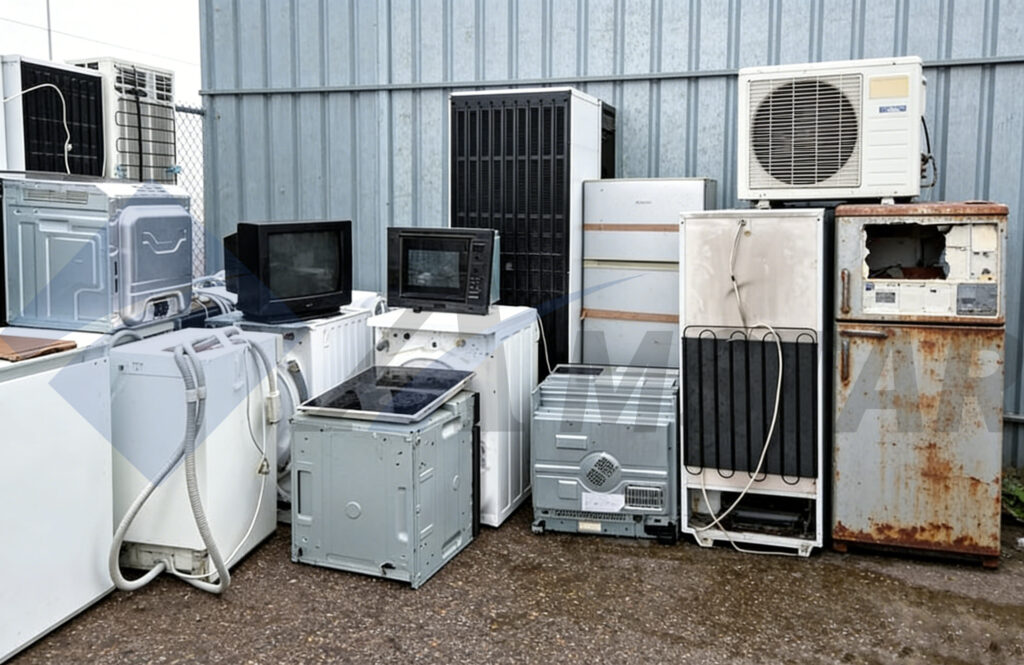
A household appliance recycling line is designed to process waste such as refrigerators, washing machines, air conditioners, and electronic equipment. The process typically includes:
- Shredding and crushing
- Magnetic separation (iron removal)
- Non-ferrous metal separation
- Plastic sorting and recovery
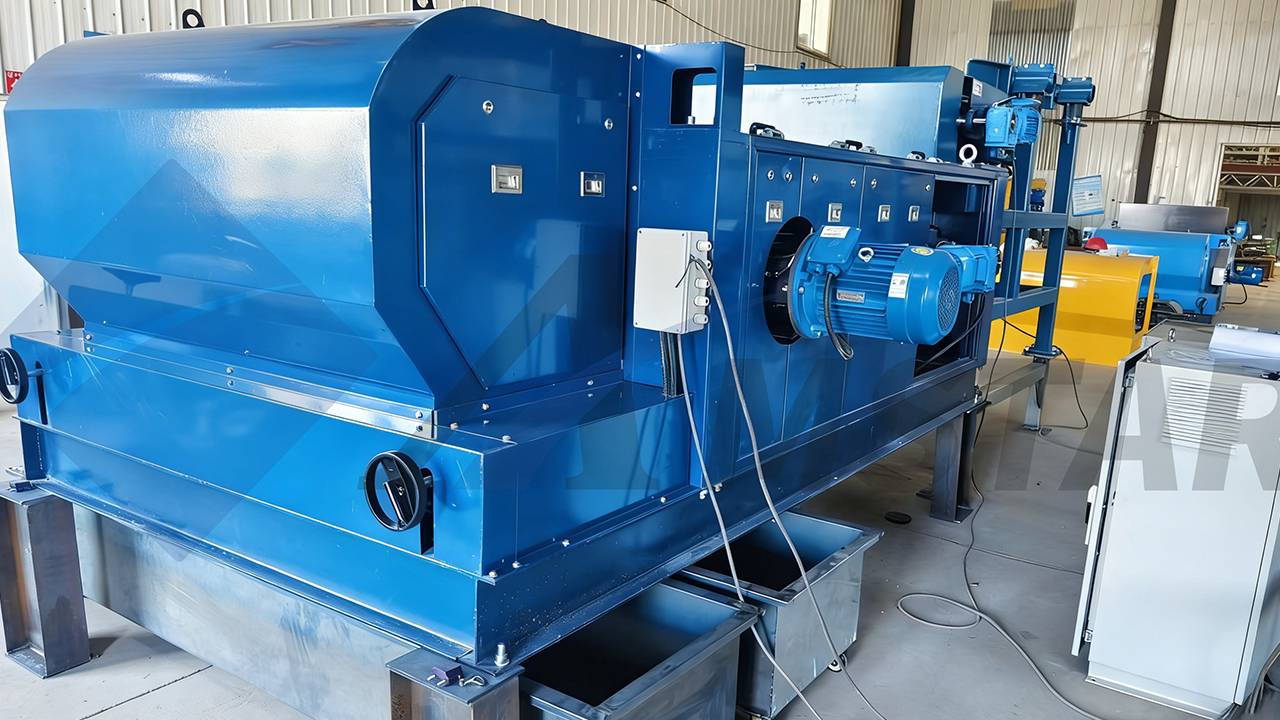
After ferrous metals are removed, the remaining mixed material (plastics + aluminum + copper) enters the eddy current separation stage, which is critical for value recovery.
2. Why Eddy Current Separation Is Essential
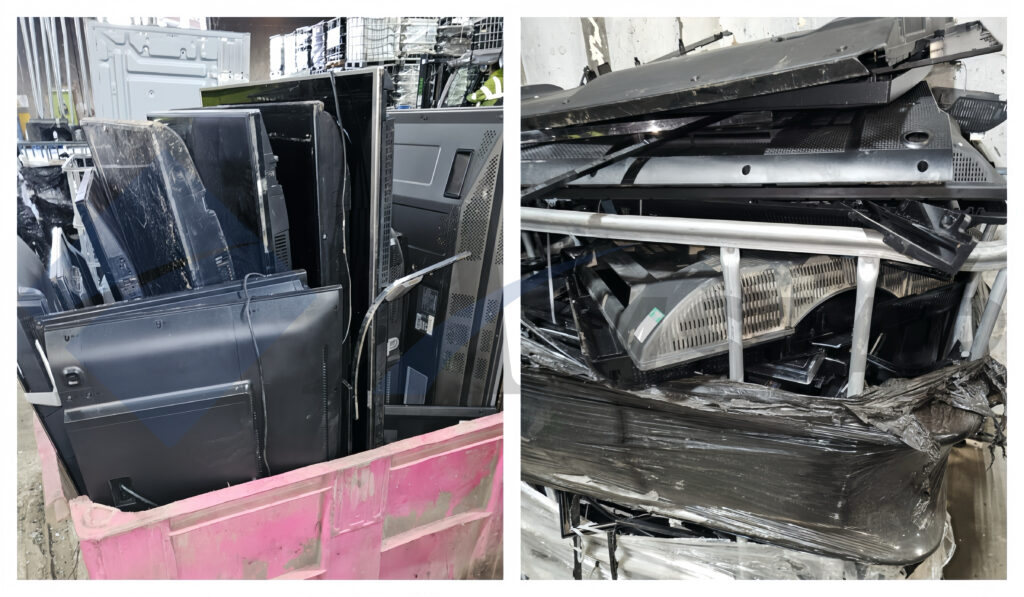
In appliance recycling, valuable metals like aluminum and copper are mixed with plastics and insulation materials.
Without efficient separation:
- Metal purity drops
- Plastic contamination increases
- Final product value decreases
Eddy current separators (ECS) solve this by automatically ejecting non-ferrous metals from the material stream.
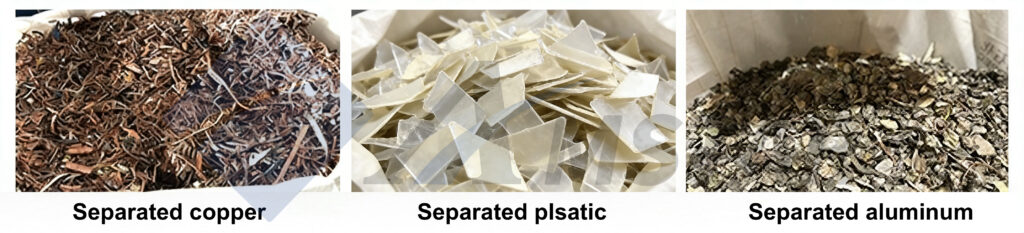
- Recover aluminum, copper, brass
- Improve downstream plastic quality
- Increase total recycling profitability
This technology is widely used because it enables fast, high-purity separation of conductive metals from non-metallic materials
3. Working Principle of Eddy Current Separator
The working mechanism is based on electromagnetic induction:
Step-by-step process:
- Material is fed onto a conveyor belt
- It passes over a high-speed rotating magnetic rotor
- The rotor creates a rapidly changing magnetic field
- Conductive metals generate eddy currents
- These currents create a repulsive force
- Metals are “thrown forward” into a separate collection area
Non-metal materials (plastic, rubber, foam) fall normally due to gravity.
In simple terms:
Metals are pushed away — plastics are not.
This happens because a changing magnetic field induces currents in conductive materials, which then generate opposing magnetic forces
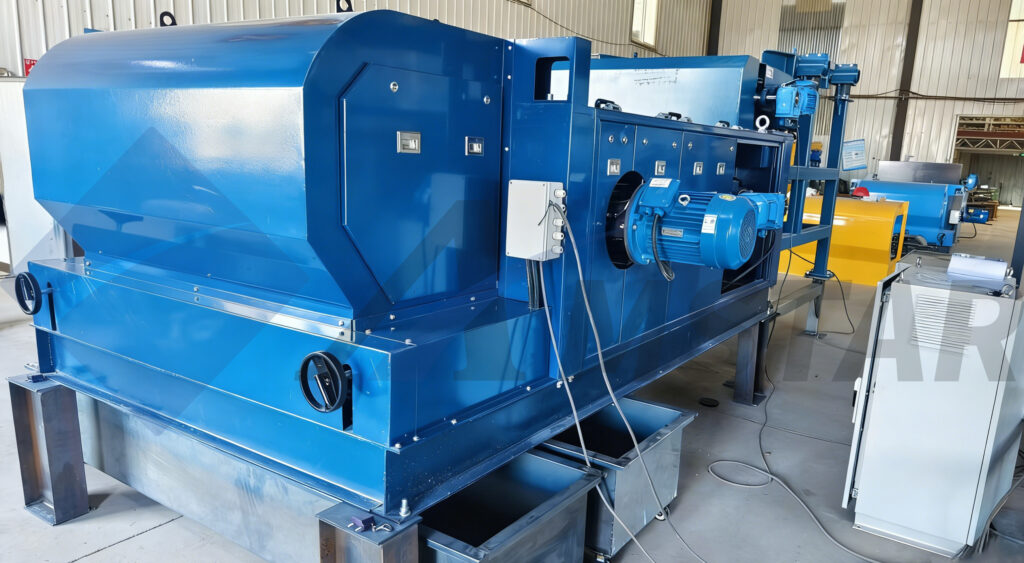
4. Typical Position in Appliance Recycling Line
Below is a simplified process flow:
Shredder → Crusher → Magnetic Separator → Eddy Current Separator → Plastic Sorting
Key logic:
- Ferrous metals (iron/steel) removed first
- Eddy current separator removes non-ferrous metals
- Remaining material is mostly plastic
This sequence is critical because ECS cannot separate ferrous metals, so pre-magnetic separation is required
5. Application in Appliance Recycling (Real Use Cases)
In real appliance recycling systems, ECS is used to separate:
| Material Source | Recovered Metals | Value Impact |
| Washing machines | Aluminum, copper | High |
| Air conditioners | Copper, aluminum | Very high |
| Refrigerators | Aluminum fragments | Medium |
| E-waste boards | Copper, mixed alloys | High |
Eddy current technology can achieve up to 90–95% recovery of aluminum in optimized systems
6. Conclusion
Eddy current separators are a core technology in modern appliance recycling lines.
They transform mixed shredded waste into:
- High-value metal fractions
- Clean plastic streams
- Improved overall system efficiency
For any recycling plant dealing with WEEE or household appliances, integrating an ECS is not optional—it is essential for profitability and product quality.
INQUIRIES
To get the latest prices and lead times, send us a message using the form below.