
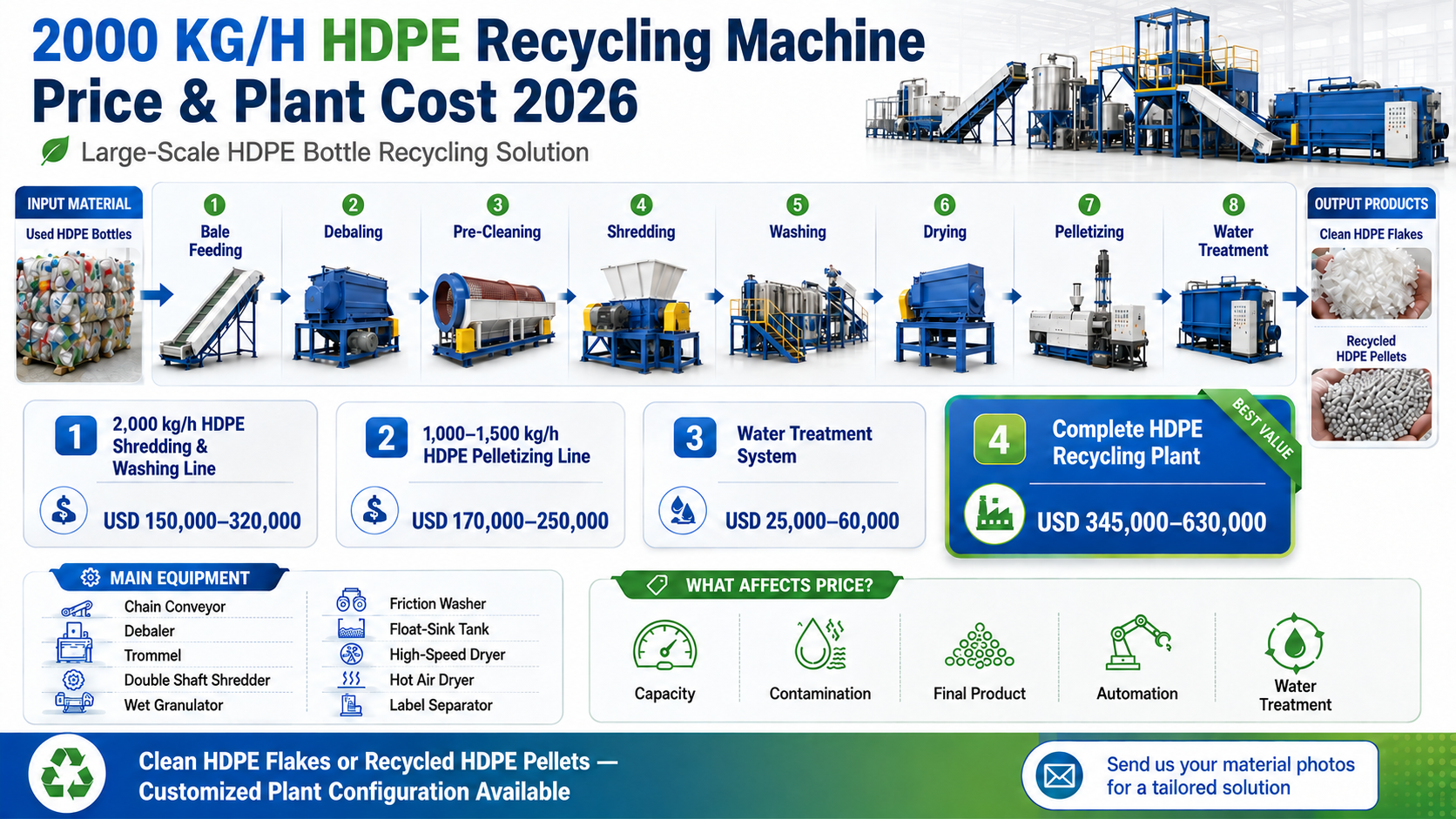
For a typical industrial HDPE recycling project, the estimated equipment investment can be:
- 2,000 kg/h HDPE Shredding & Washing Line: USD 150,000–320,000
- 1,000–1,500 kg/h HDPE Pelletizing Line: USD 170,000–250,000
- Water Treatment System: USD 25,000–60,000
- Complete HDPE Recycling Plant: approximately USD 345,000–630,000
These prices are intended as general budgetary ranges. The actual HDPE recycling machine price depends on raw material condition, contamination level, required capacity, washing process, automation level, final product quality and wastewater treatment requirements.
Quick Specs: 2000 KG/H HDPE Recycling Plant
| Item | Specification |
| Raw Material | HDPE bottles, containers and rigid HDPE waste |
| Washing Capacity | 2,000 kg/h |
| Pelletizing Capacity | 1,000–1,500 kg/h |
| Water Treatment Capacity | Up to 20 m³/h |
| Final Product | Clean HDPE flakes or recycled HDPE pellets |
| Washing Line Price Range | USD 150,000–320,000 |
| Pelletizing Line Price Range | USD 170,000–250,000 |
| Water Treatment Price Range | USD 25,000–60,000 |
| Complete Plant Cost | Approx. USD 345,000–630,000 |
| Price Basis | FOB Shanghai |
How Much Does a 2000 KG/H HDPE Recycling Machine Cost?
There is no fixed price for an HDPE recycling machine because each recycling project requires a different configuration.
For a typical 2 ton/hour HDPE bottle recycling plant, the equipment investment can generally be divided into three major sections.
The wide price range mainly reflects differences in machine configuration.
A relatively clean HDPE bottle recycling project may use a simpler washing process, while heavily contaminated post-consumer HDPE may require additional pre-washing, separation, drying and wastewater treatment stages.
1. HDPE Shredding & Washing Line
Typical Price Range: USD 150,000–320,000
The washing section is normally the core of an industrial HDPE bottle recycling plant.
For a 2,000 kg/h HDPE washing line, the equipment investment may range from approximately USD 150,000 to USD 320,000, depending on the processing requirements.
A basic system for relatively clean HDPE waste may be closer to the lower end of the range.
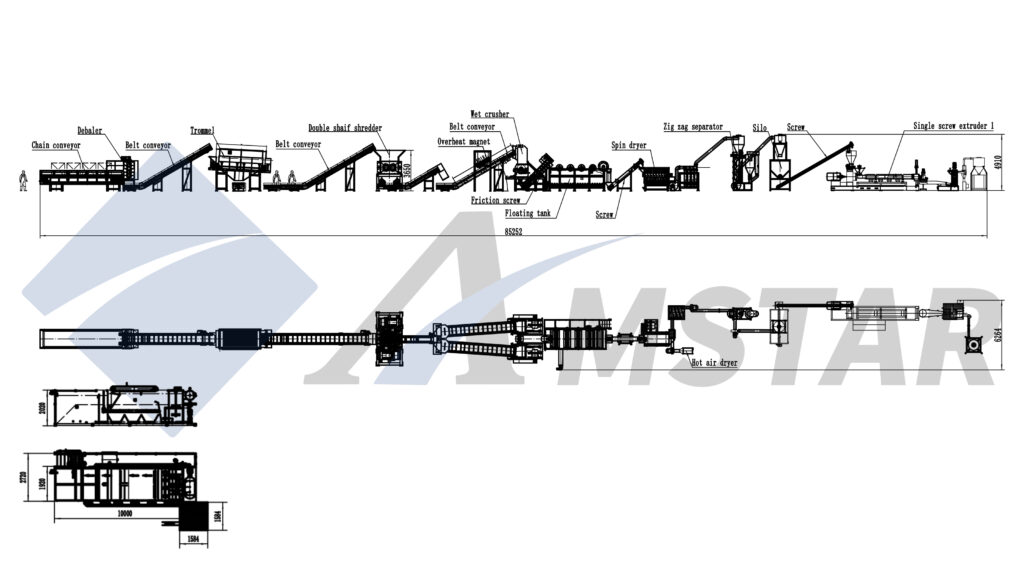
For highly contaminated post-consumer HDPE bottles, the washing line may require a more complete equipment configuration, including:
- Chain Conveyor for stable bale feeding
- Debaler for opening compressed bottle bales
- Trommel for removing sand and loose contaminants
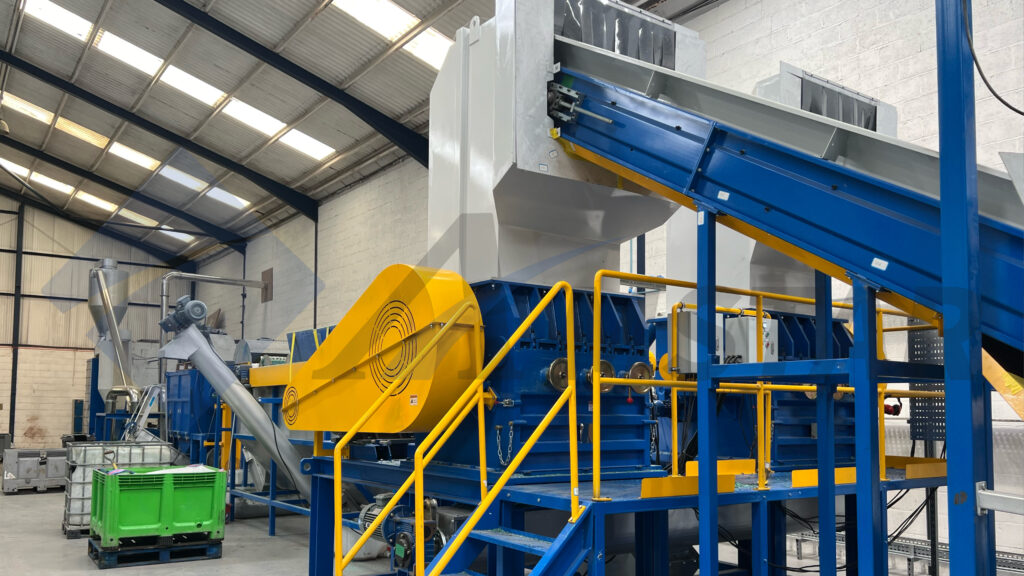
- Double Shaft Shredder for primary size reduction
- Wet Granulator ×2 for crushing and wet cleaning
- Friction Washer for intensive surface cleaning
- Float-Sink Tank for density separation
- High-Speed Dryer for mechanical dewatering
- Hot Air Dryer for further moisture reduction
- Label Separator for removing labels, dust and other lightweight contaminants
The exact configuration depends on the contamination level and required final product quality. Adding more cleaning, separation and drying stages will naturally increase the overall HDPE washing line price.
2. HDPE Pelletizing Line
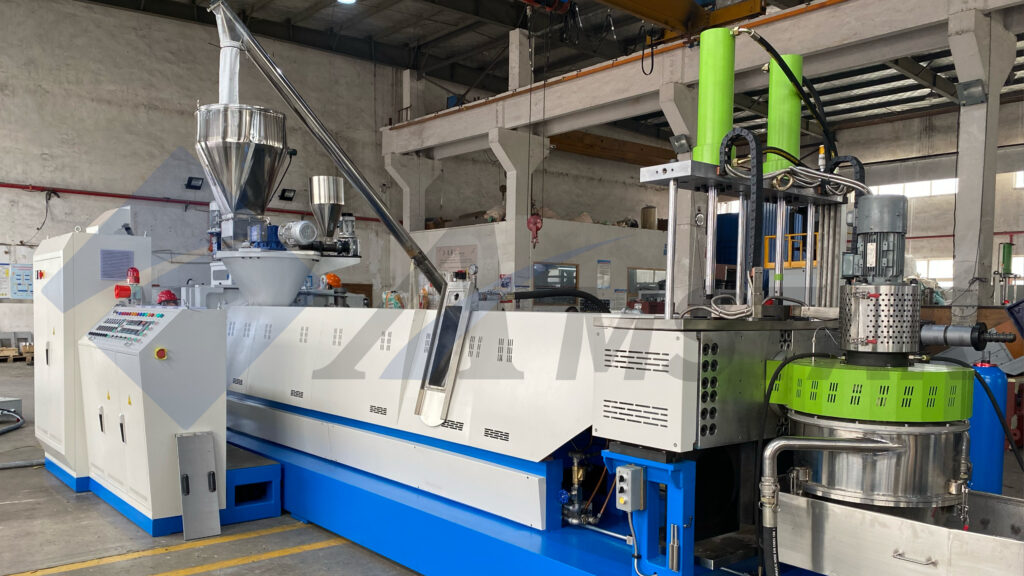
Typical Price Range: USD 170,000–250,000
If the final product needs to be recycled HDPE pellets instead of washed flakes, a pelletizing system can be added.
Typical process:
Feeder → Single Screw Extruder → Hydraulic Screen Changer → Water Ring Pelletizer → Dewatering → Storage
For a 1,000–1,500 kg/h HDPE pelletizing line, the typical investment range is approximately: USD 170,000–250,000
The HDPE pelletizing line mainly includes:
- Feeder
- Single Screw Extruder
- Hydraulic Screen Changer
- Water Ring Pelletizer
- Dewatering System
- Storage System
3. Water Treatment System
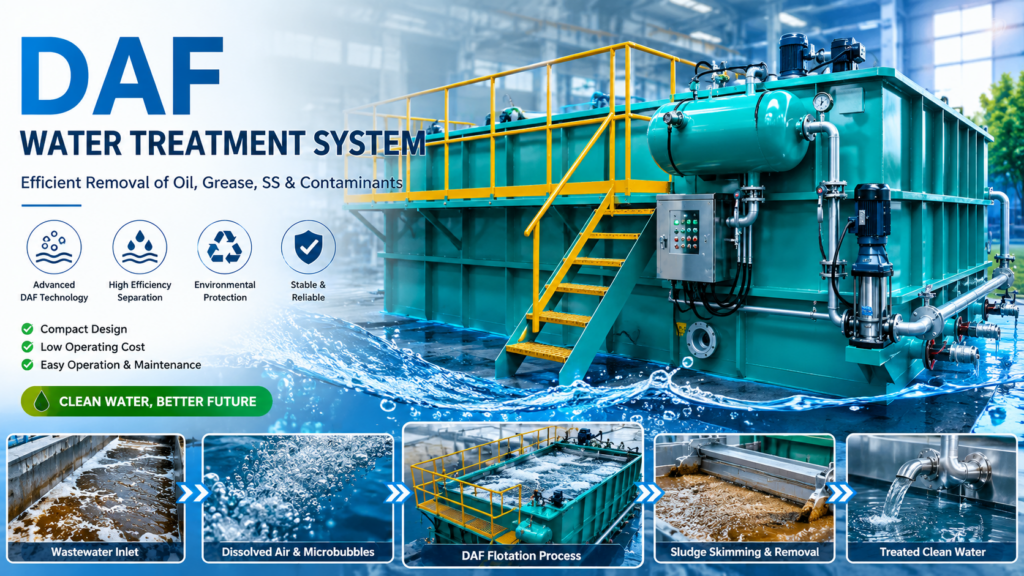
Typical Price Range: USD 25,000–60,000
A high-capacity HDPE washing plant also needs a suitable wastewater treatment and water recycling system.
For a system handling up to approximately 20 m³/h, the typical equipment investment can range from:
USD 25,000–60,000
A typical process may include:
Wastewater Collection → Chemical Dosing → DAF Treatment → Sludge Separation → Treated Water Tank → Water Reuse
A simpler water recycling system may fall toward the lower end of the price range.
More advanced systems requiring higher treatment efficiency, larger DAF units, additional filtration or sludge handling equipment will increase the investment.
Inquiries
To get the latest prices and lead times, send us a message using the form below.