
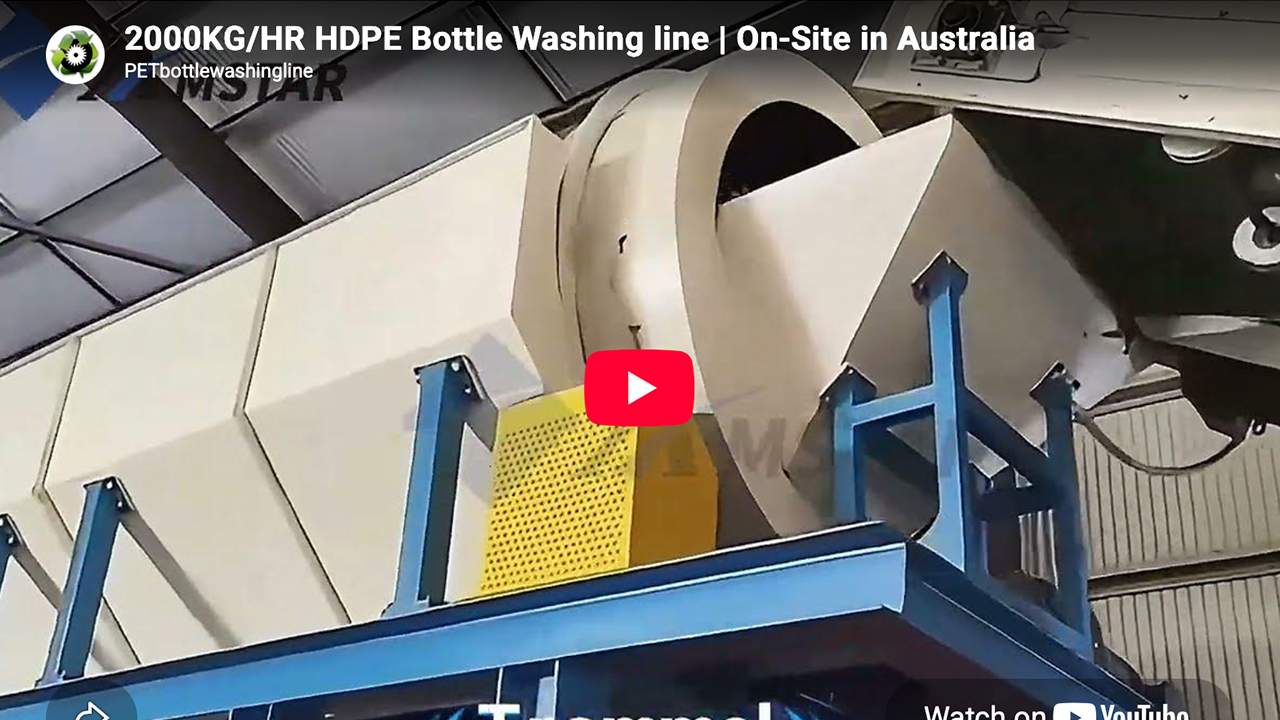
Post-consumer High-Density Polyethylene (HDPE) milk bottles represent one of the most valuable streams in rigid plastic recycling. However, transforming baled post-consumer bottles into high-purity, extrusion-grade material requires robust industrial engineering.
Here is an operational look at our 2,000 kg/hr HDPE Washing Line, currently operating on-site at a plastic recycling facility in Brisbane, Australia.
The Complete Processing Workflow: From Bales to Clean Flakes
This fully automated recycling system processes post-consumer milk bottles through a continuous, multi-stage wash plant engineered for maximum throughput and purity.
1. Automated Feeding & Debaling
The recycling process begins by loading compressed HDPE bottle bales onto a heavy-duty chain conveyor.
- Stable Material Flow: The conveyor feeds the bales into an industrial debaler, which opens and loosens the compressed bottles to ensure a consistent, regulated feed for down-line machinery.
2. Dry Pre-Treatment & Screening
Before wet processing, the material passes through a rotary trommel screen.
- Contaminant Removal: The tumbling action removes loose dirt, sand, glass fines, and small debris early in the process, protecting downstream blades and components from premature wear.
3. Dual-Granulator Size Reduction
After initial sorting, the bottles are evenly split across two high-capacity plastic granulators.
- Uniform Flake Size: The dual-granulator setup efficiently crushes the rigid bottles into uniform HDPE flakes, optimizing the surface area for intensive washing.
4. Intensive Friction Scrubbing
The crushed flakes enter a high-speed mechanical friction washing system.
- Deep Surface Cleaning: Intensive mechanical friction strips away stubborn surface dirt, milk residues, adhesives, and paper labels from the plastic surface.
5. Water-Based Sink-Float Separation
Next, the material moves into a sink-float density separation tank.
- Purity Isolation: Water-based density separation allows target HDPE flakes to float while heavy sinkable contaminants are removed, thoroughly rinsing the material in the process.
6. Multi-Stage Mechanical & Thermal Drying
Removing moisture is critical before storage, compounding, or pelletizing:
- Centrifugal Dehydration: A high-speed centrifugal dryer mechanically spins off the majority of surface water.
- Thermal Drying: A hot-air drying system further reduces residual moisture to achieve target dryness specifications.
7. Air Classification & Fine Contaminant Removal
Finally, the material passes through a Zig-Zag Air Separator.
- Lightweight Separation: Counter-current air flow lifts away remaining lightweight contaminants, including label fragments and fine dust, leaving clean, dry, and production-ready recycled HDPE flakes.
Technical Specifications & System Performance
| Performance Parameter | System Specification |
| Line Capacity | 2,000 kg/hr continuous operational throughput |
| Input Material | Baled post-consumer HDPE milk bottles |
| Plant Location | Brisbane, Australia |
| Core Equipment Integration | Chain Conveyor, Debaler, Trommel Screen, Dual Granulators, Friction Washer, Sink-Float Tank, Centrifugal Dryer, Thermal Hot-Air Dryer, Zig-Zag Air Separator |
| End Product | Clean, dry, high-purity recycled HDPE flakes |
Frequently Asked Questions
What is a 2000 kg/hr HDPE bottle washing line? A 2000 kg/hr HDPE bottle washing line is an industrial plastic recycling system that granulates, washes, separates, and dries post-consumer rigid HDPE bottles into clean, high-purity flakes at a rate of 2 metric tons per hour.
How are post-consumer HDPE milk bottles processed into recycled flakes? HDPE milk bottles are processed through a series of automated stages: bale breaking, dry trommel screening, dual wet granulation, high-speed friction scrubbing, sink-float water separation, mechanical and hot-air drying, and air classification.
Why is sink-float separation used in plastic washing lines? Sink-float separation utilizes liquid density differences to separate floating polymers like HDPE from heavier sinking contaminants such as PVC, dirt, and glass, ensuring maximum output purity.
Upgrade Your Facility’s Recycling Machinery
Whether you process post-consumer HDPE bottles, rigid PP containers, or agricultural film, our engineering team builds custom recycling systems for demanding industrial environments.
Explore our full line of industrial plastic recycling machinery or contact us at plasticrecyclingmachine.net to discuss complete HDPE washing line configurations for your plant.
Inquiries
To get the latest prices and lead times, send us a message using the form below.