
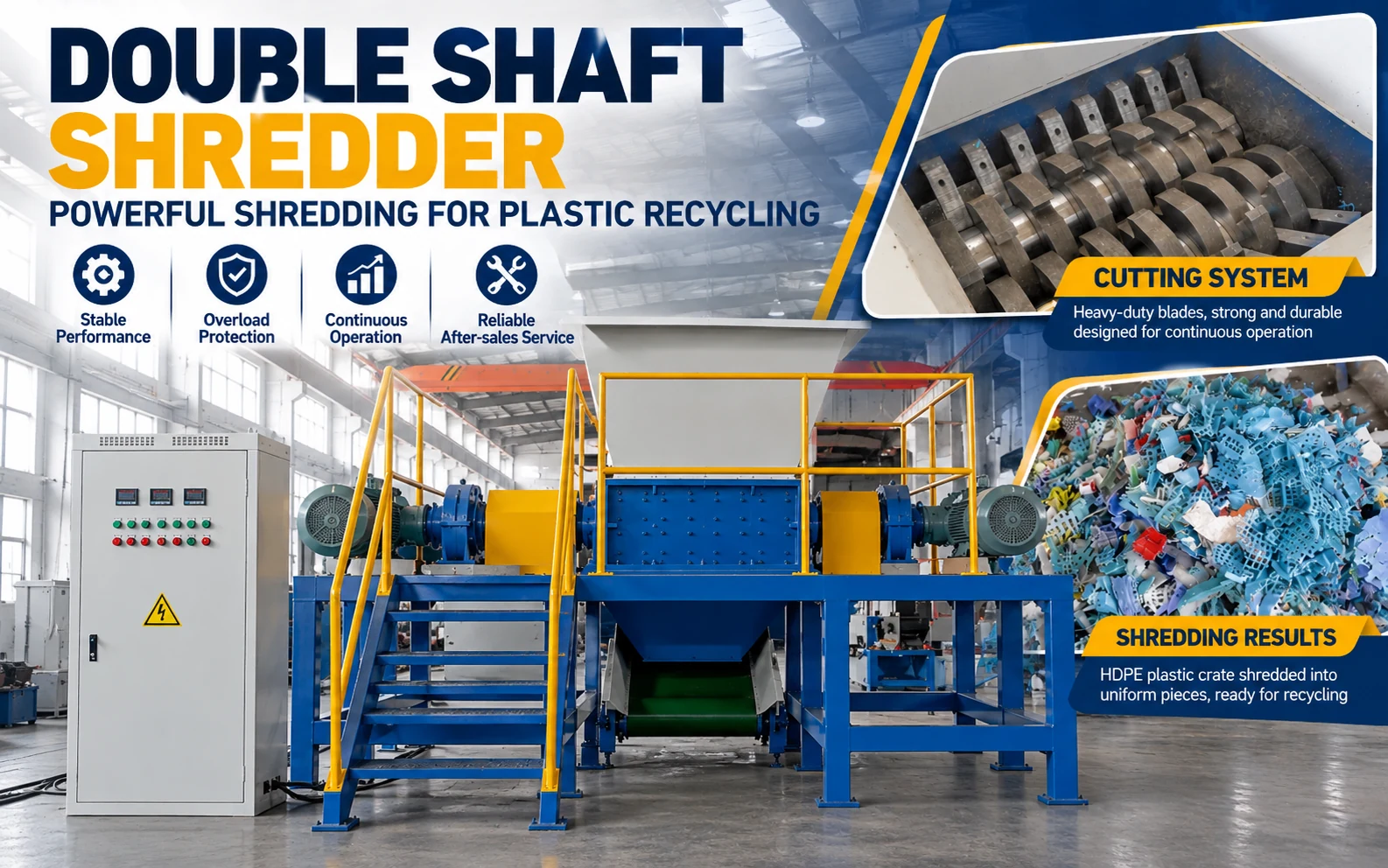
A Practical Buyer’s Guide to Stable Performance, Lower Downtime & Long-Term Value
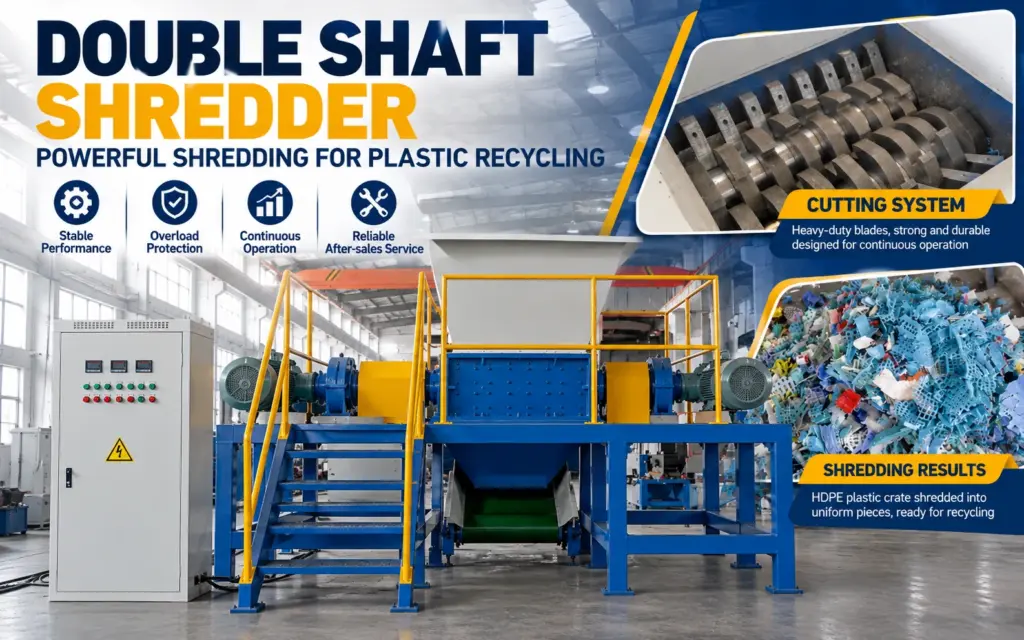
Quick answer: A reliable plastic shredder matches its cutting system, torque, feeding method and overload protection to the real waste stream. Assess it with a representative loaded trial, then compare maintenance access, wear parts and support. Motor power and an empty-machine demonstration do not establish long-term performance.
A shredder that runs smoothly for 20 minutes is not necessarily a shredder that performs reliably for years. For recycling plants, the real test is how the machine handles changing feedstock, unexpected overloads and everyday wear.
Before choosing a plastic shredder, look beyond motor power and price. Evaluate the complete system: rotor design, gearbox, protection logic, bearings, testing and serviceability.
Reliability Is a System, Not a Single Feature
| Key area | What to check | Why it matters |
|---|---|---|
| Drive & torque | Adequate low-speed torque for the target material | Consistent cutting under load |
| Overload response | Automatic reverse and protective stop logic | Less manual clearing after jams |
| Rotor & blades | Blade geometry, material and replaceable wear parts | Predictable cutting and maintenance |
| Bearings & seals | Protection from dust, moisture and contamination | Reduced risk of premature wear |
| Controls & access | Clear alarms, safe maintenance access | Faster diagnosis and servicing |
A 5-Step Reliability Check Before Purchase
01 Define the material Share photos, dimensions, bulk density, contamination level and required throughput.
02 Match the cutting system Confirm shaft speed, blade profile, knife thickness and discharge-size expectations.
03 Test with actual feedstock Request a loaded trial with representative material—not only an empty-machine demonstration.
04 Observe recovery Check overload detection, auto-reverse behavior, vibration, noise and operating temperature.
05 Confirm support Agree on commissioning guidance, spare-part availability, warranty scope and response channels.
No-Load Test vs. Real-World Trial
| No-load demonstration | Loaded material trial |
|---|---|
| Shows basic rotation and electrical operation | Reveals cutting behavior and torque demand |
| May not expose feeding problems | Shows bridging, wrapping and jamming risks |
| Limited insight into throughput | Allows throughput measurement over a defined period |
| Does not validate output size | Allows discharge material to be inspected |
Application Spotlight: Plastic Recycling
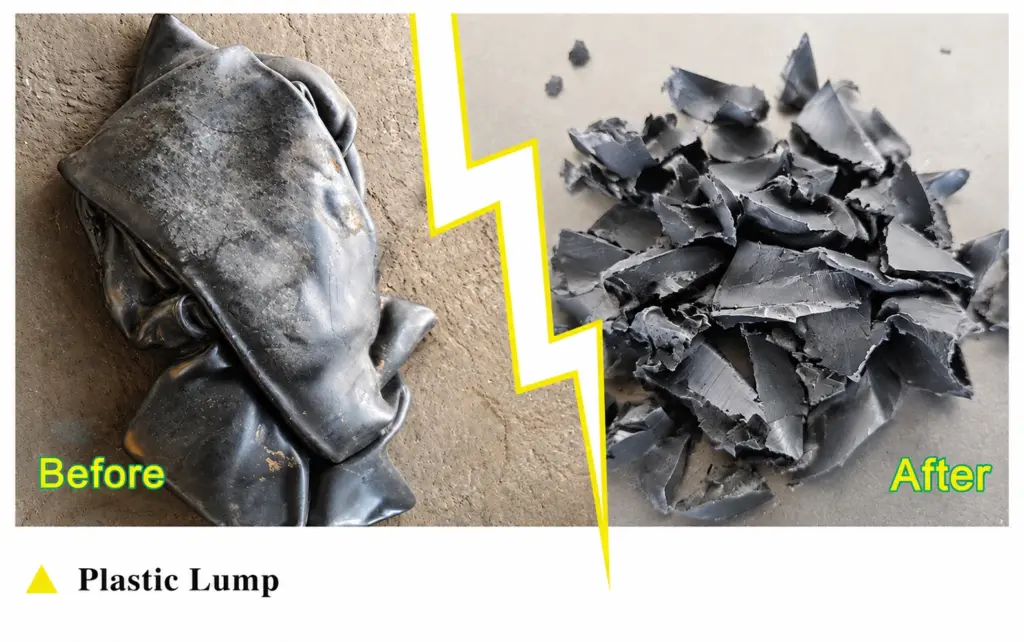
In a plastic recycling line, the right shredder configuration depends on the feedstock. Rigid HDPE containers, PP crates, pipes and thick plastic lumps place different demands on the cutting system than film, woven bags or flexible packaging. A machine optimized for one material should not automatically be assumed suitable for another.
| Feedstock | Primary design concern | Useful follow-up process |
|---|---|---|
| HDPE drums / PP crates | Torque, blade durability, stable feeding | Granulation and washing |
| Plastic pipes / bulky purgings | Chamber size and controlled bite | Secondary size reduction |
| Film / woven bags | Wrapping prevention and feeding control | Washing, drying and pelletizing |
| Mixed rigid plastics | Contamination screening and variable load | Sorting and granulation |
The Real Cost of a Shredder
Purchase price is only one part of the equation. Unplanned downtime, blade replacement, power use, cleaning time and delayed spare parts can outweigh a small initial saving. Ask suppliers to explain their recommended maintenance intervals and provide a practical spare-parts list for your specific material.
Questions Worth Asking Your Supplier
- Can you test our material and provide a video of the loaded trial?
- What happens automatically when the shafts jam?
- Which wear parts can be replaced on site?
- What are the recommended inspection and lubrication procedures?
- What support and spare parts are available after delivery?
Build the Right Shredding Solution
A reliable Plastic shredder starts with a realistic understanding of the material and the production goal. At Plastic Recycling Machine, we help customers evaluate shredder configurations as part of a practical recycling process—from primary size reduction to downstream washing and pelletizing. Share your feedstock details and target capacity to discuss a suitable solution.
For guarding, blockage intervention and maintenance safety, consult the UK HSE guidance on granulators and the applicable requirements for the actual equipment. A loaded performance trial does not replace a machinery safety assessment.
Compare single-shaft plastic shredders and double-shaft plastic shredders against your feedstock; add a suitable plastic granulator when a further size-reduction stage is needed. The guide to film wrapping and hard-plastic jams explains common application problems.
Common Questions
Is a no-load demonstration enough to evaluate a plastic shredder?
No. It shows basic rotation and electrical operation, but does not establish throughput, feeding behavior, output size or recovery from an overload. Request a defined loaded trial using representative material.
Is a single-shaft or double-shaft shredder more reliable?
Reliability depends on matching the design to the waste stream and duty, not the number of shafts alone. Evaluate material dimensions, toughness, flexible content, contamination, feeding behavior and the required discharge size before comparing configurations.
How should I compare the long-term cost of two shredders?
Compare expected wear parts, inspection and lubrication needs, cleaning access, energy use, downtime exposure and spare-part support alongside purchase price. Ask suppliers to explain the assumptions for your material and operating schedule.
References
INQUIRIES
To learn more about this topic or get prices and lead times for the machinery mentioned, please send us a message using the form below.