
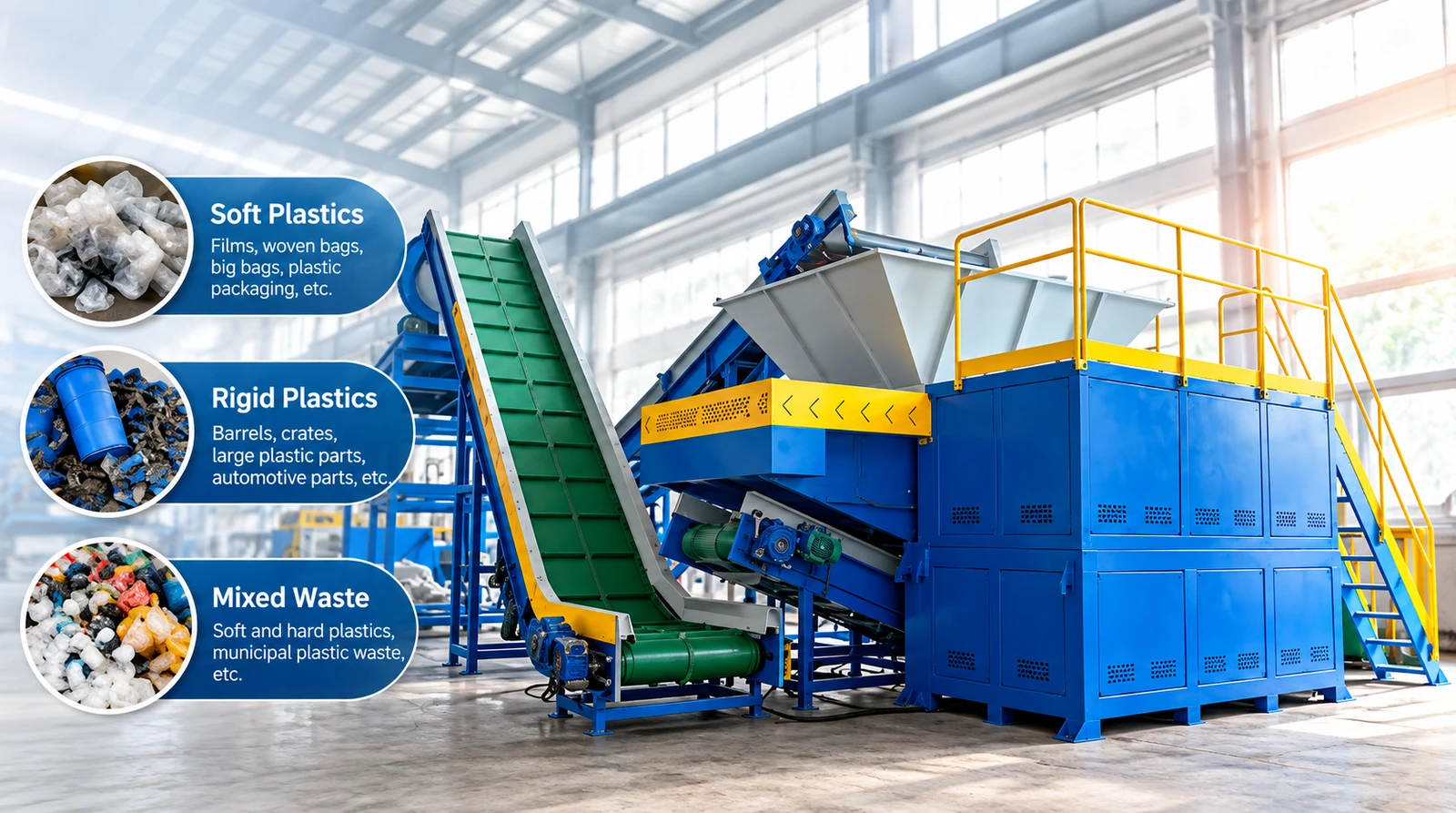
A practical guide to choosing the right shredder for soft plastics, rigid waste and mixed recycling streams.
Film winding around the rotor? Thick plastic parts stalling the machine? These problems cost more than maintenance time – they interrupt your entire recycling line. The solution starts with matching the cutting system, feeding method and drive protection to the material.
1. Soft Plastics: Reduce Rotor Wrapping
LDPE film, agricultural film, woven sacks and FIBC bags can fold, stretch and wrap around a rotating shaft. Repeated manual cleaning reduces uptime and creates additional safety exposure.
What helps: a single-shaft shredder engineered for flexible feedstock, with controlled material circulation, a large cutting rotor, properly positioned counter-knives and automatic overload protection. A dual counter-knife arrangement can improve cutting action and reduce wrapping risk. Performance still depends on film condition, feeding rate and blade setup.
2. Rigid Plastics: Manage Shock Loads and Jamming
HDPE drums, injection-molded parts, appliance housings and thick plastic lumps demand stable torque and robust cutting geometry. Oversized or tough pieces can cause sudden load spikes.
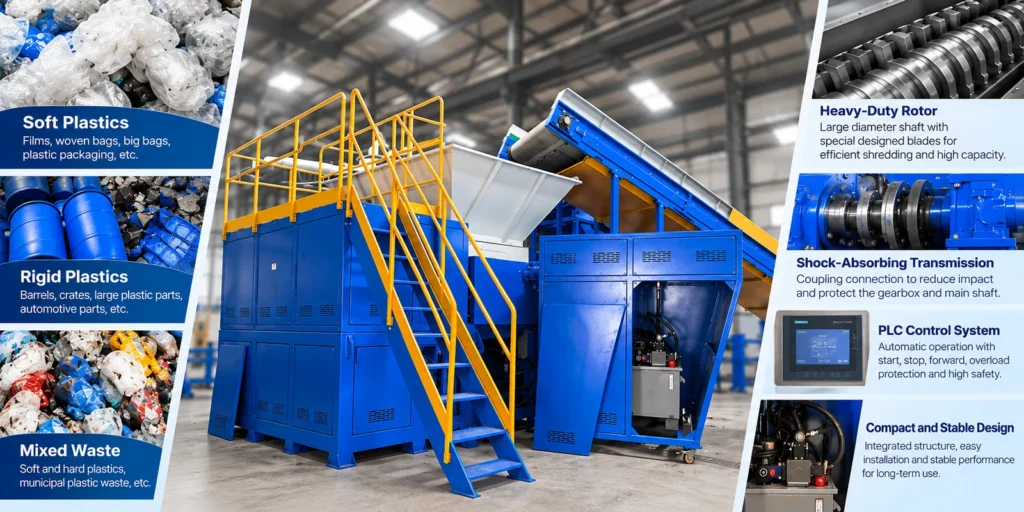
What helps: a heavy-duty rotor, suitable knife configuration, correctly sized gearbox and a coupling selected to manage shock loads. PLC-controlled overload response and automatic reverse cycles can help release jams before operators intervene. Feed size and throughput should be confirmed by material testing.
3. Mixed Waste: Choose Flexibility, Not Just Motor Power
When feedstock varies from batch to batch, a dual-shaft shear shredder may be a practical first-stage option. Blade thickness, cutter arrangement and shaft speed should be matched to the expected material mix. For a more uniform final particle size, a secondary granulator may be required.
| Material challenge | Recommended focus | Main benefit |
|---|---|---|
| Film and woven bags | Anti-wrapping cutting design | Less manual cleaning |
| Thick rigid plastics | Torque + shock-load protection | Fewer unplanned stops |
| Mixed or bulky waste | Dual-shaft shearing + blade selection | Wider feedstock flexibility |
4. Think Beyond the Shredder
A shredder only prepares the material. If the waste contains soil, labels, oil or moisture, the downstream washing, separation and drying stages determine whether it is ready for pelletizing. An integrated process reduces bottlenecks between machines.
Before You Buy: Ask These 4 Questions
- What material will you process?
- What are its maximum dimensions and contamination levels?
- What throughput and discharge size do you need?
- Will the shredded material go to washing, granulation or direct feeding?
Find the Right Shredding Solution
Send us photos or videos of your waste material, target capacity (kg/h) and required output size. We can help evaluate a suitable single-shaft, dual-shaft or shredder–granulator configuration for your recycling project.
INQUIRIES
To learn more about this topic or get prices and lead times for the machinery mentioned, please send us a message using the form below.