
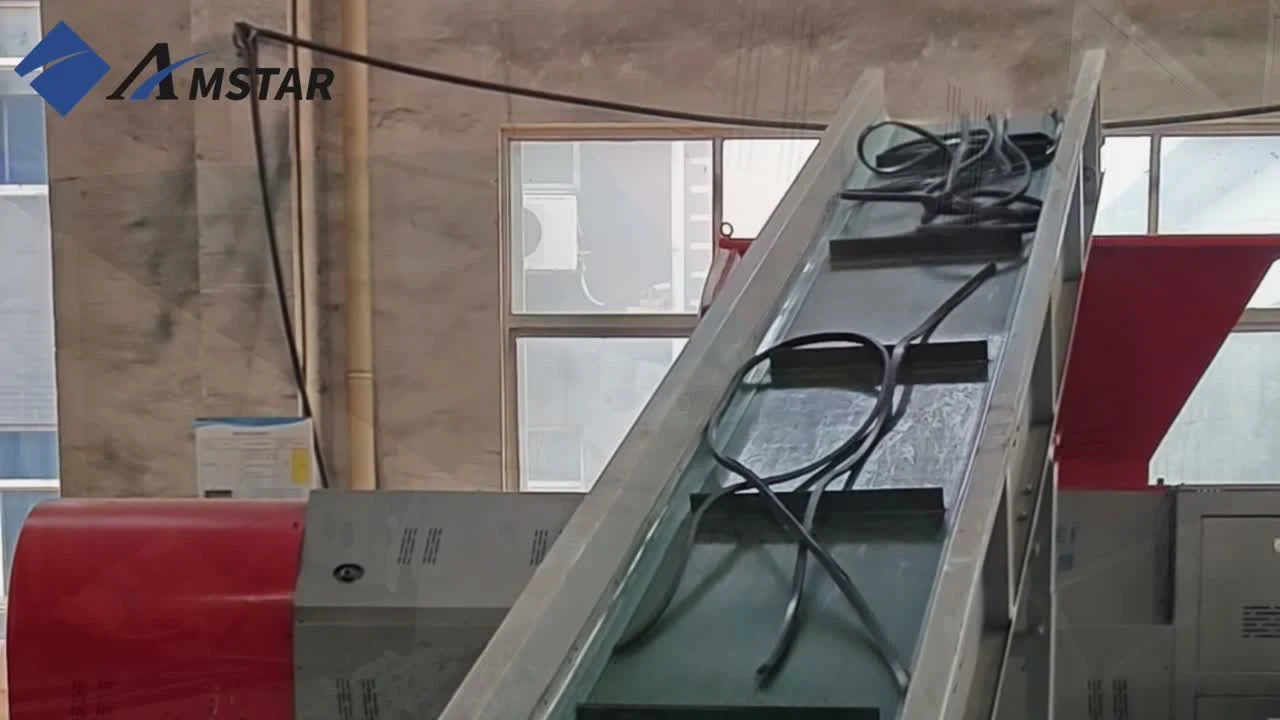
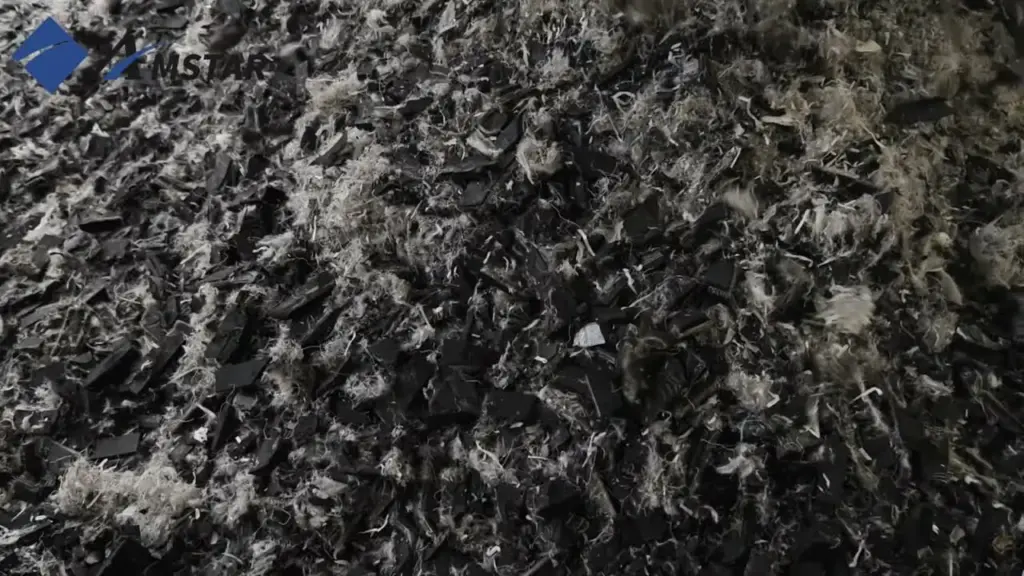
A rubber belt shredder cuts bulky waste conveyor belts into smaller pieces for handling and further recycling. In this AMSTAR test, a feed conveyor carries flexible rubber belts into the cutting chamber. In particular, the video shows the feed material and shredded output.
How the Rubber Belt Shredder Works
First, the conveyor feeds belts into the chamber. Inside the chamber, rotating blades cut and tear the rubber. Then the machine discharges coarse fragments that are easier to handle and convey.
Together, the continuous feed and reinforced frame suit industrial use. However, the clip does not establish throughput, a uniform cut size or the machine’s ability to process steel-cord belts.
Which Rubber Materials Can It Process?
Typical feedstocks include waste conveyor belts, industrial rubber belts, rubber sheets, strips and flexible offcuts. For example, narrow rubber strips and wide reinforced belts can behave very differently at the cutter. Check the largest piece size and the material construction before selecting a machine.
For related equipment, see AMSTAR’s elastic plastics and rubber size-reduction machines. For background, the Sustainability Victoria technology guide describes mechanical recovery of conveyor-belt rubber and the separate removal of steel and textile reinforcement.
Choosing a Rubber Belt Shredder
Start with the material sample. Share the belt width, thickness and type of reinforcement, along with feed photos. Next, specify the target throughput, preferred piece size and the stage that will receive the shredded rubber. That information helps AMSTAR size the feed and cutting system and plan a representative trial.
Common Questions
Can the shredder take steel-cord conveyor belts?
Confirm this with a representative trial before specifying the machine. In particular, steel cord changes how the belt cuts. It may therefore require separate equipment to recover the rubber and steel.
Does the shredder produce rubber crumb?
The test shows coarse pieces. To make a finer product, plan a separate granulation step. In addition, decide whether the line needs to separate steel or textile fibers before or after that step.
INQUIRIES
To learn more about this topic or get prices and lead times for the machinery mentioned, please send us a message using the form below.