
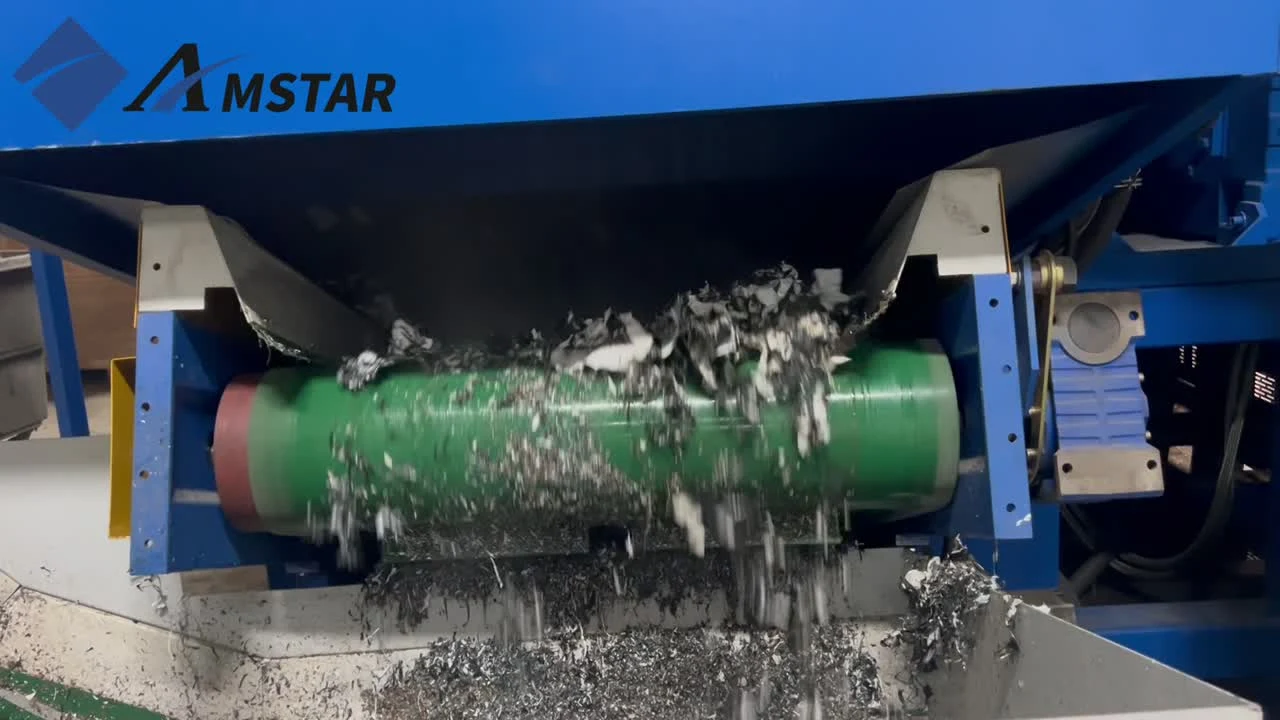
This agricultural film washing line in Canada processes about 1,200 kg/h of used polypropylene (PP) and polyethylene (PE) film. AMSTAR supplied the line to turn dirty, bulky film into clean, compact material for later pelletizing. The video follows the film from the shredder to the squeezers.
Agricultural Film Washing Line at a Glance
| Item | Details |
|---|---|
| Project Location | Canada |
| Processing Capacity | 1200 kg/hr |
| Raw Materials | PP/PE Agricultural Films |
| Final Product | Clean, Densified Plastic Material |
| Application | Plastic Film Recycling & Pelletizing |
From Dirty Film to Densified Flakes
1. Shredding and Pre-Cleaning
First, a heavy-duty single-shaft shredder cuts bulky film. A trommel screen then removes loose sand and soil before the material reaches the wet stages. Next, the customer’s existing Lindner crusher reduces the size further. A buffer silo feeds the wash line at a steadier rate.
2. Two-Stage Float Washing
In the first tank, PP and PE film float while heavier dirt and sand settle. A centrifugal dryer removes excess water between stages. Then the second tank uses cleaner water to remove more of the remaining dirt.
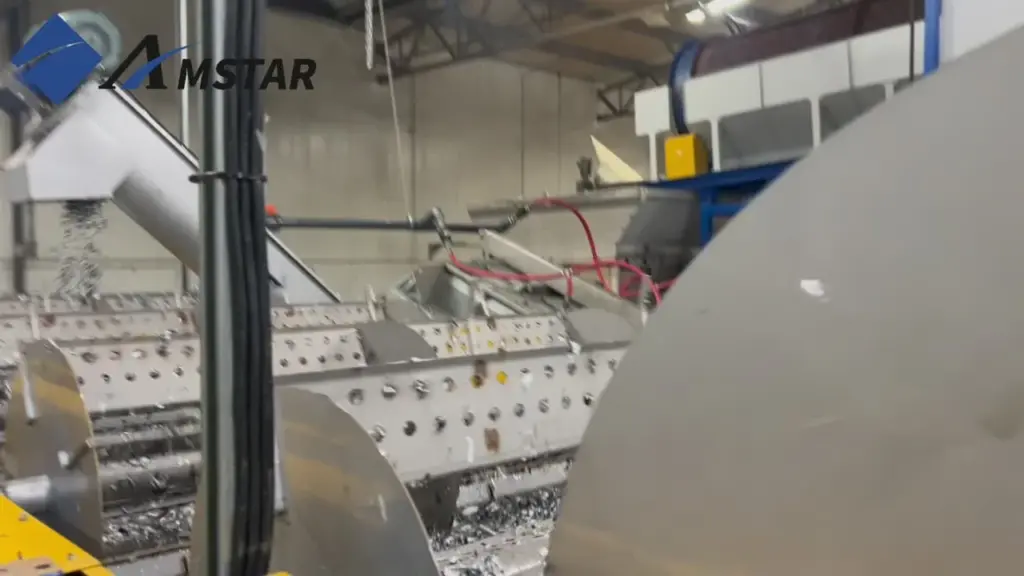
3. Dewatering and Densifying
After washing, screw-press film squeezers press water out of the film and compact it. This raises its bulk density. As a result, the material takes up less space and is easier to handle and feed into a pelletizer.
What the Canada Installation Shows
The video covers pre-cleaning before washing and the use of an existing crusher in a new line. In addition, it shows the densified film from the squeezers. In other words, the line makes feedstock for a separate pelletizing stage.
AMSTAR configures PP and PE film recycling systems around feedstock, dirt load and the intended output. See the earlier Canada video focused on washing and squeezing for a closer look at the wet section.
Upstream preparation also matters. For instance, Cleanfarms’ agricultural plastics program plan describes sorting and preparing farm plastics before collection.
Common Questions
Why screen agricultural film before washing?
A screen removes loose sand, soil and small debris early. As a result, the tanks have less dirt to handle. However, the amount the screen removes depends on how much soil sticks to the film.
Will every agricultural film washing line run at 1,200 kg/h?
That figure describes the Canadian installation. However, for a new project, confirm the polymer, feed condition, soil load and output requirements. Then use a trial with representative material to establish the design rate.
INQUIRIES
To learn more about this topic or get prices and lead times for the machinery mentioned, please send us a message using the form below.