
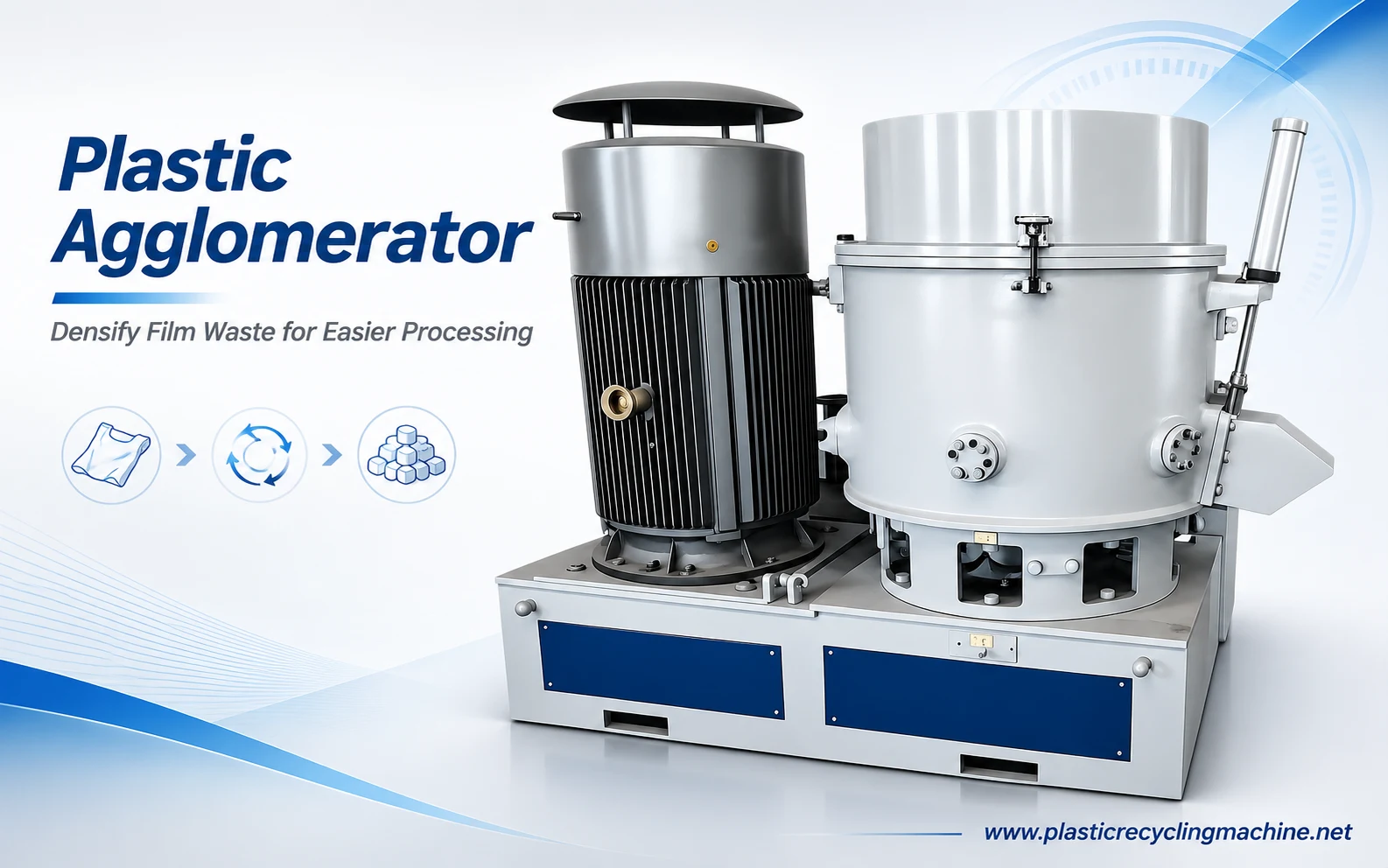
Film waste densification turns loose plastic film into compact pieces that take up less space and feed more evenly into downstream equipment. First, a plastic agglomerator cuts the film and uses friction to soften it. Then the machine cools the material so it can discharge as irregular granules.
1. Why Film Waste Densification Helps
Agricultural films, PE packaging films, PP woven bags and other flexible plastics often arrive in bulky, tangled and low-density form. As a result, loose film can bridge at the extruder inlet or wrap around moving parts. Either problem can interrupt feeding.
A plastic agglomerator machine handles this step for suitable loose films. In particular, it helps produce a more consistent feed for the next stage.
2. How Does a Plastic Agglomerator Work?
First, rotating and stationary blades cut and mix the film inside the chamber. Then friction softens the plastic so small pieces bond. Finally, controlled cooling stabilizes the agglomerates.
| PROCESS STAGE | WHAT HAPPENS |
|---|---|
| 01 Cutting & size reduction | Rotating and stationary blades cut the film into smaller pieces. |
| 02 Friction heating | Continuous cutting and movement generate heat, gradually softening the material. |
| 03 Agglomeration | Partially softened plastic pieces begin to bond into compact clusters. |
| 04 Cooling & discharge | Controlled water spraying removes heat and helps prevent excessive melting before discharge. |
If you discharge too early, the pieces may not hold together. Conversely, too much heat can make the plastic stick. Therefore, match the cycle to the film in the chamber.
3. What Materials Can Be Processed?
Agglomerators commonly handle thin thermoplastic films and certain fibers. For example, the following materials may suit this process:
| MATERIAL | TYPICAL EXAMPLES |
|---|---|
| PE films | LDPE and HDPE packaging films, agricultural films and stretch films |
| PP materials | PP films, woven bags and raffia |
| PS materials | Suitable PS waste and expanded polystyrene (EPS) |
| Flexible PVC | Soft PVC films and flexible production scrap |
| PET fibers | Suitable polyester fibers and textile waste |
Check film thickness, moisture, contamination and how the material behaves when heated. For instance, thick, rigid plastics usually need a different process. Also, sort out metal and treat heavily contaminated feed before agglomeration. If the feedstock is mixed or unusual, run a material trial first.
4. Film Waste Densification Before and After
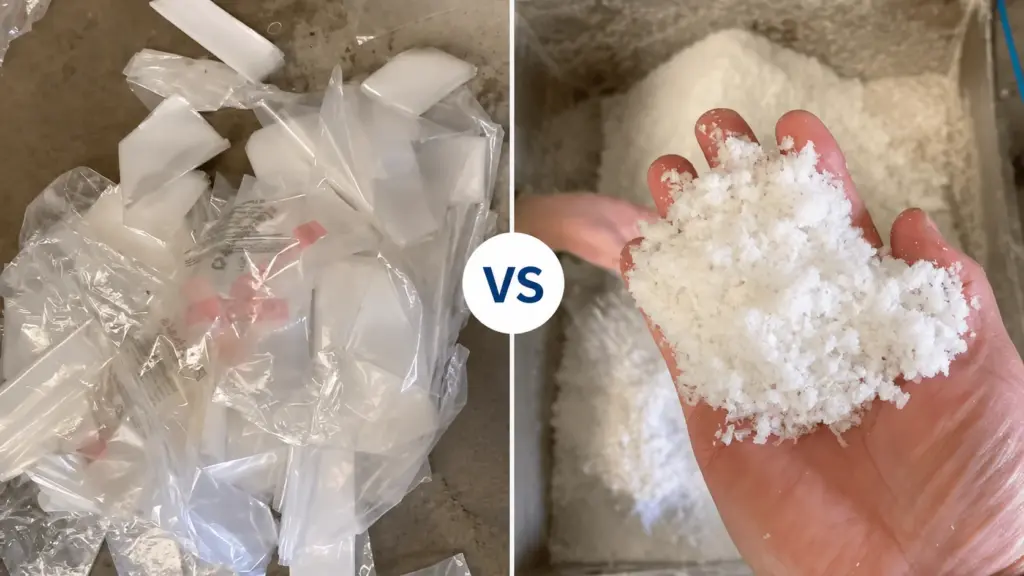
| LOOSE FILM WASTE | AGGLOMERATED MATERIAL |
|---|---|
| Bulky and lightweight | More compact material form |
| Can be difficult to feed | Generally easier to convey and feed |
| Requires more storage space | Reduced volume for storage and handling |
| Irregular material flow | Improved handling consistency |
Specifically, agglomeration changes the physical form of suitable plastic waste. As a result, it can make the material easier to handle and feed. Plan washing, drying and extrusion separately according to the feedstock and final product.
5. Where Does It Fit in a Plastic Recycling Line?
On a film washing and recycling line, an agglomerator can prepare washed and dried plastic film for extrusion. For example, a line may use these stages:
- Shredding
- Washing & separation
- Dewatering & drying
- Agglomeration
- Extrusion & pelletizing
Not every recycling line requires an agglomerator. Depending on the material, moisture level and extruder, a film squeezer or force-feeding system may fit better. Ultimately, the raw material and final product guide the choice.
6. How to Specify Film Waste Densification
- Material type: Identify whether the feedstock is PE film, agricultural film, PP woven bags, fibers or a mixed stream.
- Material condition: Check thickness, moisture content, contamination and whether washing or drying is required.
- Throughput target: Match the equipment capacity to the actual production requirement and operating schedule.
- Downstream compatibility: Confirm that the agglomerated material is suitable for the feeding and extrusion system.
Start with a sample of your actual film. During the trial, compare bulk density and feed consistency. In addition, measure the output moisture before testing it in downstream equipment. Finally, use those results and the downstream feed requirements to choose a machine.
7. AMSTAR – Plastic Recycling Solutions
AMSTAR supplies equipment for each stage of plastic recycling. For example, a film line can combine size reduction, washing, drying and pelletizing. However, the right sequence depends on the waste stream.
Whether you are processing agricultural films, PE packaging waste or PP woven bags, our team can help evaluate your raw materials and recommend a suitable recycling process.
Discuss your plastic film recycling project with AMSTAR.
Technical note: A Plastic Agglomerator uses cutting and frictional heat to form agglomerates. By contrast, a film squeezer primarily removes water and compacts washed film through mechanical pressing. Therefore, choose between them based on what the film needs before extrusion.
For technical background, the CIPET national study on post-consumer plastics recycling describes how friction heats bulky plastics during agglomeration. AMSTAR’s agglomerator overview covers the machine and its typical applications.
Common Questions
Does film waste densification make finished pellets?
After cooling, an agglomerator discharges irregular clusters. To make uniform pellets, the next stage melts the prepared feed and cuts it in a pelletizing system.
When should I choose a squeezer instead?
If the main task is to remove water from washed film, test a screw-press squeezer first. On the other hand, test an agglomerator if your film is dry but too bulky to feed well.
INQUIRIES
To learn more about this topic or get prices and lead times for the machinery mentioned, please send us a message using the form below.