
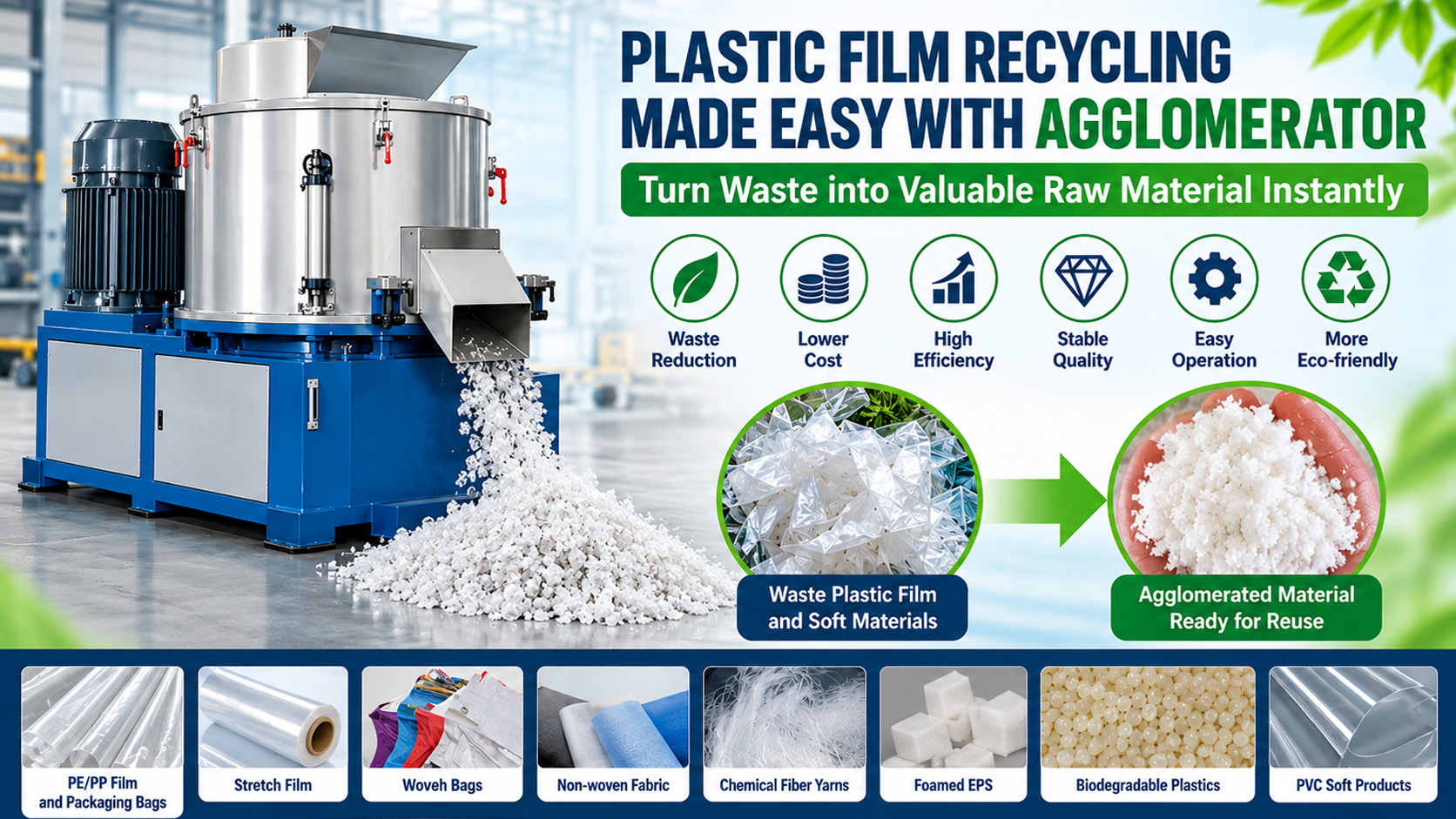
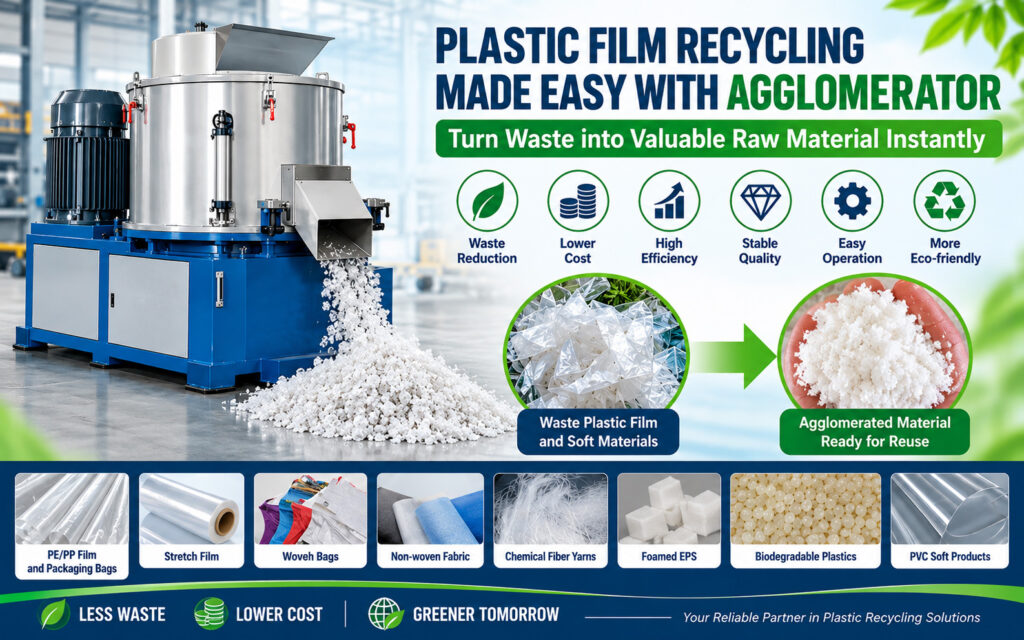
Plastic film waste is one of the most common challenges in film blowing, bag making, packaging, woven bag, and other plastic processing industries. Because these materials are lightweight and bulky, they take up considerable storage space and can be difficult to feed directly into downstream recycling equipment.
A plastic agglomerator provides a simple and efficient solution. By cutting, heating, compacting, and agglomerating lightweight plastic waste, it converts loose film and soft plastics into dense, free-flowing material that is much easier to handle, store, transport, and reuse.
What Is a Plastic Agglomerator?
A plastic agglomerator, also known as a plastic film agglomerator or densifier, is designed primarily for processing thermoplastic films and other lightweight plastic materials.
Inside the agglomerator, high-speed rotating blades continuously cut and mix the material. Friction generated during this process increases the material temperature and causes the plastic to soften and shrink. Controlled cooling then helps form the material into irregular, dense agglomerates.
Compared with loose film waste, the resulting material has a much higher bulk density and improved feeding characteristics, making it more suitable for subsequent extrusion and pelletizing.
Typical Materials
Plastic agglomerators can be used for a wide range of soft and lightweight materials, including:
- PE and PP film
- Plastic packaging bags
- Stretch and wrapping film
- PP/PE woven bags
- Non-woven fabric
- Plastic fibers and yarn waste
- Soft PVC materials
- Selected foamed plastics
- Production scraps and offcuts
The actual processing method should always be selected according to the polymer type, material condition, moisture level, and downstream recycling requirements.
How Does a Plastic Agglomerator Work?
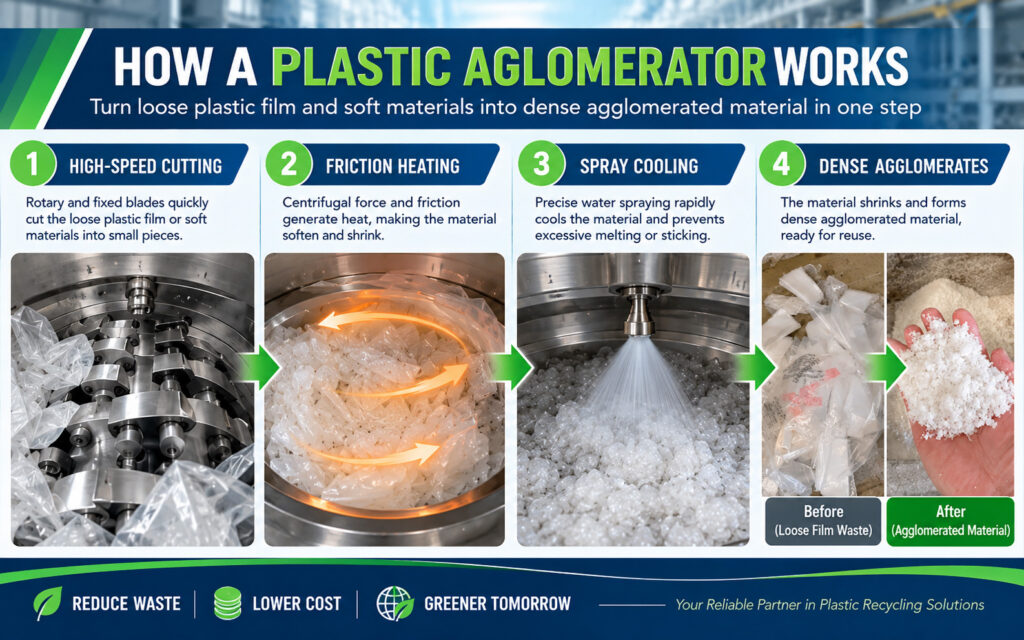
The agglomeration process combines size reduction, friction heating, densification, and controlled cooling inside one processing chamber.
1. High-Speed Cutting
Loose plastic film or soft plastic waste is fed into the chamber. High-speed rotating blades work together with fixed blades to rapidly cut and mix the material into smaller pieces.
2. Friction Heating
As the blades continue rotating, the material circulates at high speed inside the chamber. Continuous friction between the plastic, blades, and chamber generates heat.
The plastic gradually softens and begins to shrink, significantly reducing its original volume.
3. Controlled Cooling
At the appropriate processing stage, a controlled amount of water is introduced. Rapid cooling helps prevent excessive melting and sticking while promoting the formation of dense agglomerates.
4. Agglomeration and Discharge
After cooling and continued mixing, the lightweight plastic waste is transformed into compact, irregular granules or agglomerates.
The processed material can then be discharged for storage, reuse, or feeding into an extrusion pelletizing system.
Where Are Plastic Agglomerators Used?
Film blowing and bag-making plants can use agglomerators to process clean edge trims, rejected film, and production scraps for internal recycling.
Plastic recycling plants use them to densify lightweight film before extrusion and pelletizing, improving material handling and feeding stability.
Woven bag and non-woven fabric manufacturers can process lightweight production waste into a denser form for subsequent recycling.
Packaging manufacturers can recover suitable clean offcuts and rejected products instead of treating them entirely as waste.
Plastic Agglomerator vs. Plastic Pelletizing Machine
A plastic agglomerator and a pelletizing machine perform different functions and should not be considered direct substitutes.
A plastic agglomerator mainly cuts, heats, shrinks, and densifies lightweight plastics. Its output is typically irregular agglomerated material rather than finished uniform pellets.
A plastic pelletizing machine, on the other hand, melts and plasticizes the material in an extruder before filtration and cutting it into relatively uniform recycled pellets.
For many film recycling applications, the two machines can work together:
Plastic Film → Agglomeration/Densification → Extrusion → Filtration → Pelletizing → Recycled Pellets
For clean production scrap, agglomerated material may also be reused directly in certain manufacturing processes, depending on the material and final product requirements.
Is an Agglomerator Suitable for Dirty Post-Consumer Film?
This depends on the condition of the material.
A plastic agglomerator is especially effective for relatively clean film, production scraps, edge trims, woven bags, fibers, and other soft plastics.
If the incoming film contains significant amounts of sand, soil, labels, oil, organic contamination, or other impurities, washing and drying should normally be carried out before agglomeration or pelletizing.
For heavily contaminated post-consumer film, a complete recycling system may include:
Shredding → Washing → Friction Washing → Density Separation → Dewatering/Drying → Densification → Pelletizing
Selecting the correct process according to the feedstock is essential for achieving stable production and consistent recycled-material quality.
Choosing the Right Plastic Agglomerator
When selecting an agglomerator, capacity alone should not be the only consideration. Important factors include:
- Plastic type: PE, PP, PVC, etc.
- Film thickness and bulk density
- Moisture and contamination level
- Required hourly capacity
- Feeding method
- Motor power and chamber size
- Blade design and wear resistance
- Cooling and temperature control
- Intended downstream process
- Required final bulk density
A properly configured machine can improve processing efficiency and provide more stable material preparation for the entire recycling line.
Conclusion
A plastic agglomerator is an effective solution for recycling plastic film and other lightweight soft plastics. It transforms loose, difficult-to-handle waste into compact agglomerated material, reducing volume while improving storage, transportation, and downstream feeding.
For film manufacturers, packaging companies, woven bag producers, and plastic recycling plants, agglomeration can be an important step toward improving in-house recycling and reducing material waste.
At Plastic Recycling Machine, we provide plastic agglomerators and complete recycling solutions for PE/PP film, woven bags, non-woven materials, and other plastic waste.
Whether you need a standalone agglomerator or a complete plastic film recycling and pelletizing line, the equipment can be configured according to your raw material, required capacity, and final product.
Looking for a suitable plastic agglomerator for your recycling project? Contact us with your material type, photos or videos, and required capacity, and we can recommend a suitable recycling solution.
Inquiries
To get the latest prices and lead times, send us a message using the form below.