
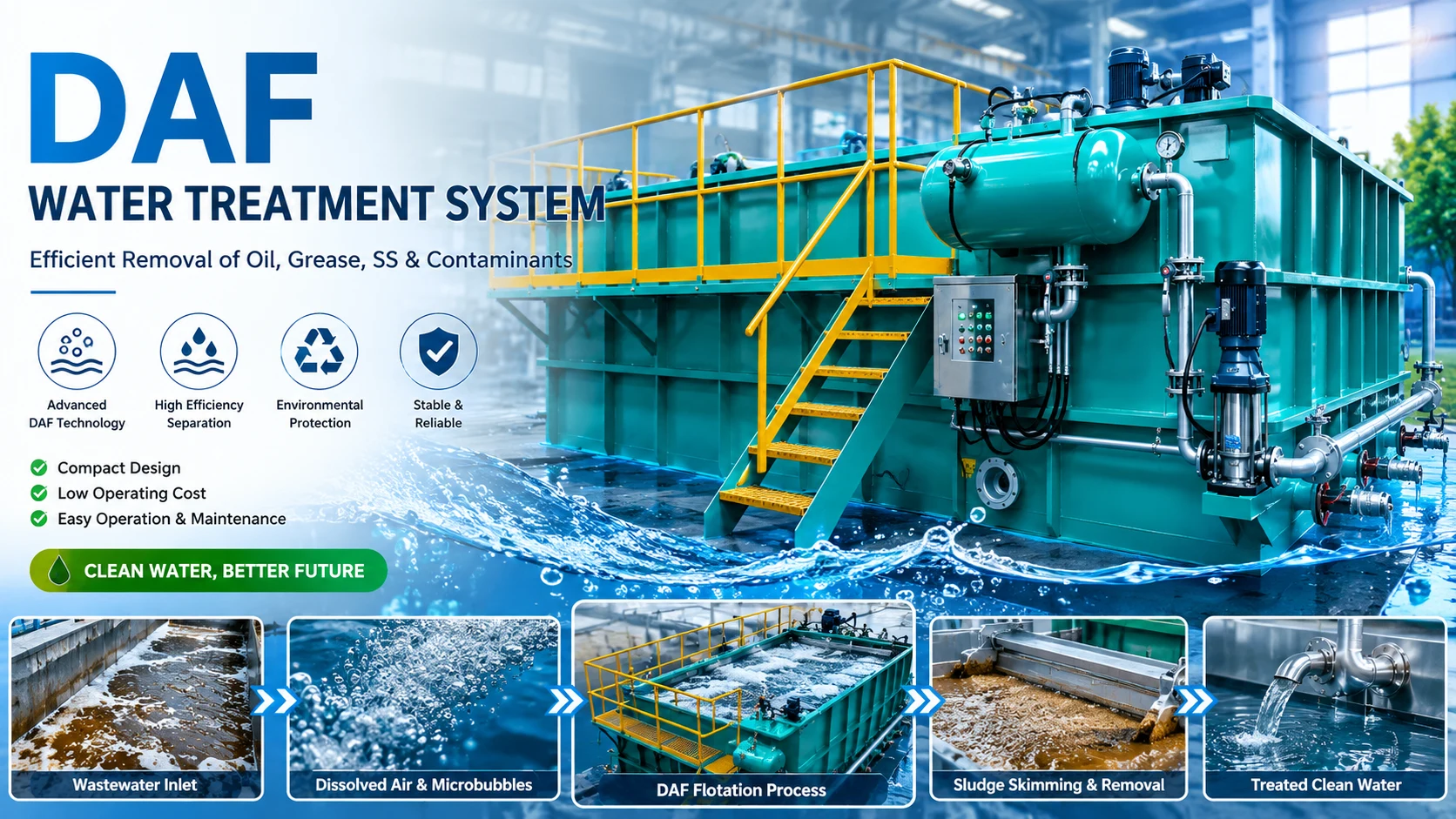
DAF water treatment removes fine suspended solids from plastic washing wastewater. To do this, dissolved air flotation uses tiny bubbles to lift particles to the surface. Then a skimmer gathers them as sludge. As a result, the clarified stream contains fewer suspended particles. For example, if the clarified water meets the needs of the first wash stage, the plant can reuse it there.
1. How DAF Water Treatment Works
- Conditioning: First, coagulation and flocculation bind fine particles together.
- Flotation: Next, fine air bubbles lift the flocs toward the surface.
- Separation: Finally, the skimmer removes the sludge and the clarified water flows out.
2. A complete water recycling process
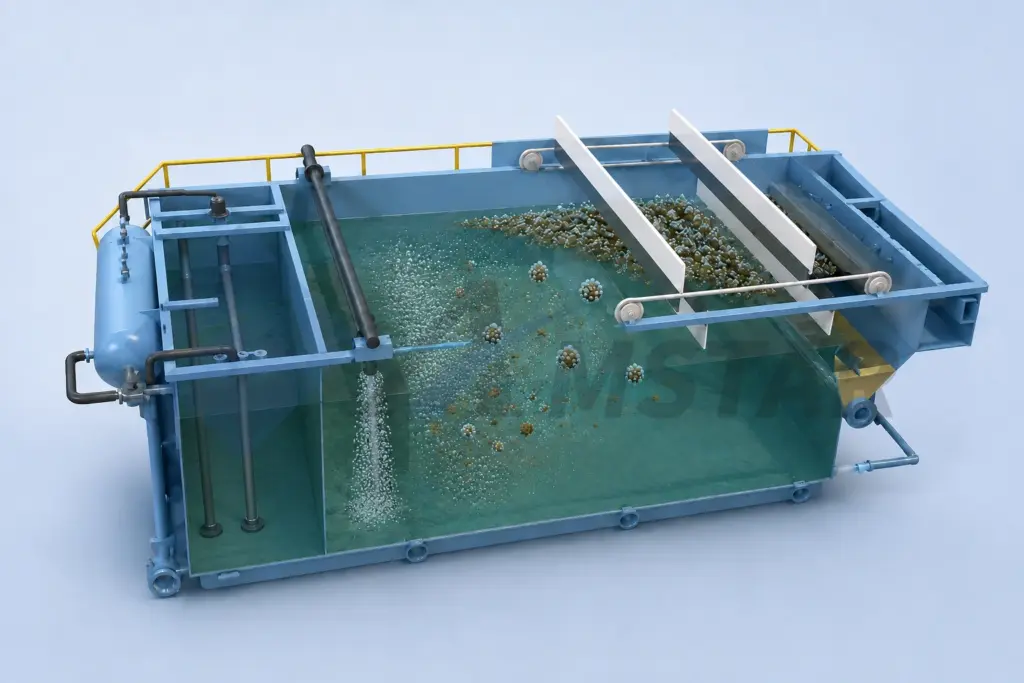
First, screen the wastewater and remove grit. Then condition the water to help fine particles form flocs.
During flotation, tiny air bubbles lift the conditioned flocs. Then the skimmer collects them.
- After skimming, send the sludge for dewatering or disposal.
- Meanwhile, the clarified water flows to storage or reuse.
After clarification, test the water against the needs of each wash stage. For example, the first wash and the final rinse may need different water quality. If the clarified water falls short of the target, add filtration or another treatment step for the remaining pollutants.
3. Benefits for a Plastic Washing Plant
- Water savings: Reduce fresh-water demand where reuse is feasible.
- Production stability: Limit solids buildup and help protect washing equipment.
- Wastewater management: Concentrate separated solids for controlled sludge handling.
4. Match the treatment to your material
| Recycling line | Typical contaminants | DAF solution focus |
|---|---|---|
| PET bottle washing | Label fines, glue residues, fine PET particles | Remove suspended solids and conditioned flocs. |
| PP / HDPE rigid washing | Dirt, oil, plastic fragments | Separate light solids and conditioned oil-containing flocs. |
| PE / agricultural film | Soil, sand, fibers, organic matter | Remove heavy grit upstream; float remaining fine solids. |
5. Sizing DAF Water Treatment for Your Plant
| Your project data | Why it matters |
|---|---|
| Plastic type & capacity (kg/h) | Identifies the washing process and contamination profile. |
| Wastewater flow (m³/h) | Determines hydraulic capacity and peak-load needs. |
| Water quality & reuse target | Guides chemical dosing, flotation and further treatment. |
In general, DAF targets suspended matter. However, dissolved pollutants may remain in the water. For that reason, use sample tests and reuse targets to set treatment requirements. Then confirm performance before sizing the system or estimating water savings.
6. One partner, complete recycling solutions
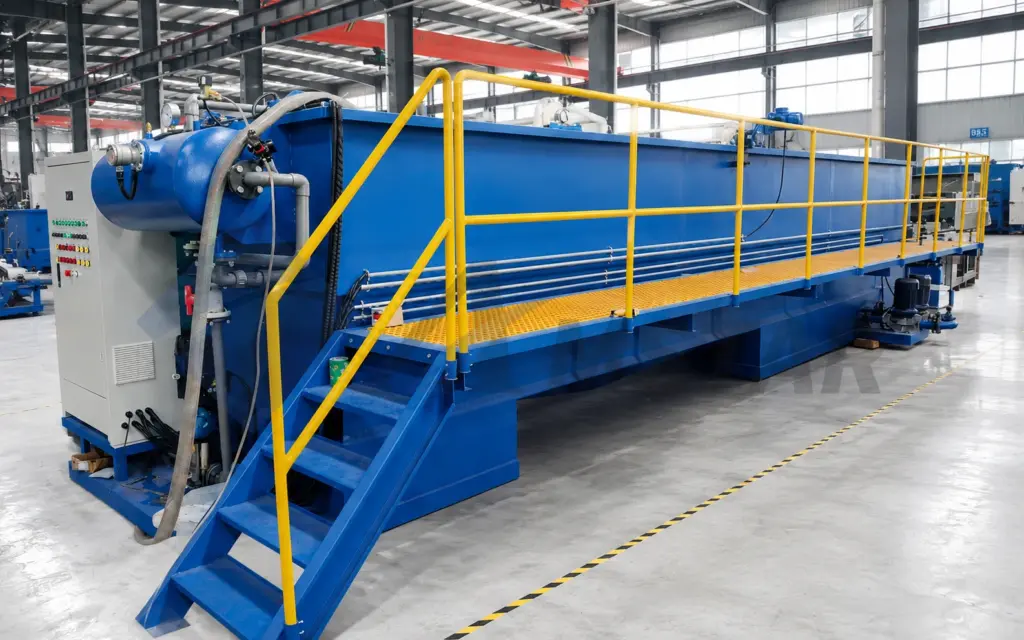
For new plants and upgrades, AMSTAR integrates dissolved air flotation equipment with plastic washing lines. For example, a PET bottle washing line can release label fines and glue residues, while a film line may bring in more sand and soil. To get started, share your material, wash water flow and reuse target so AMSTAR can assess the setup.
The U.S. EPA industrial wastewater treatment database describes how DAF releases air from pressurized water to help separate suspended solids, oil and grease.
Common Questions
When can DAF-treated water go back into a wash line?
First, check whether the clarified water meets the needs of the wash stage. For example, test for suspended solids and oils. In addition, look for buildup of dissolved material. By contrast, final rinses may require more treatment or fresh water.
What measurements do I need to size a DAF system?
First, measure average and peak water flow. Next, send representative samples and identify the wash line feedstock. Also specify the quality you need for reuse. As a result, the supplier can size the unit for both the solids load and the water flow.
INQUIRIES
To learn more about this topic or get prices and lead times for the machinery mentioned, please send us a message using the form below.