
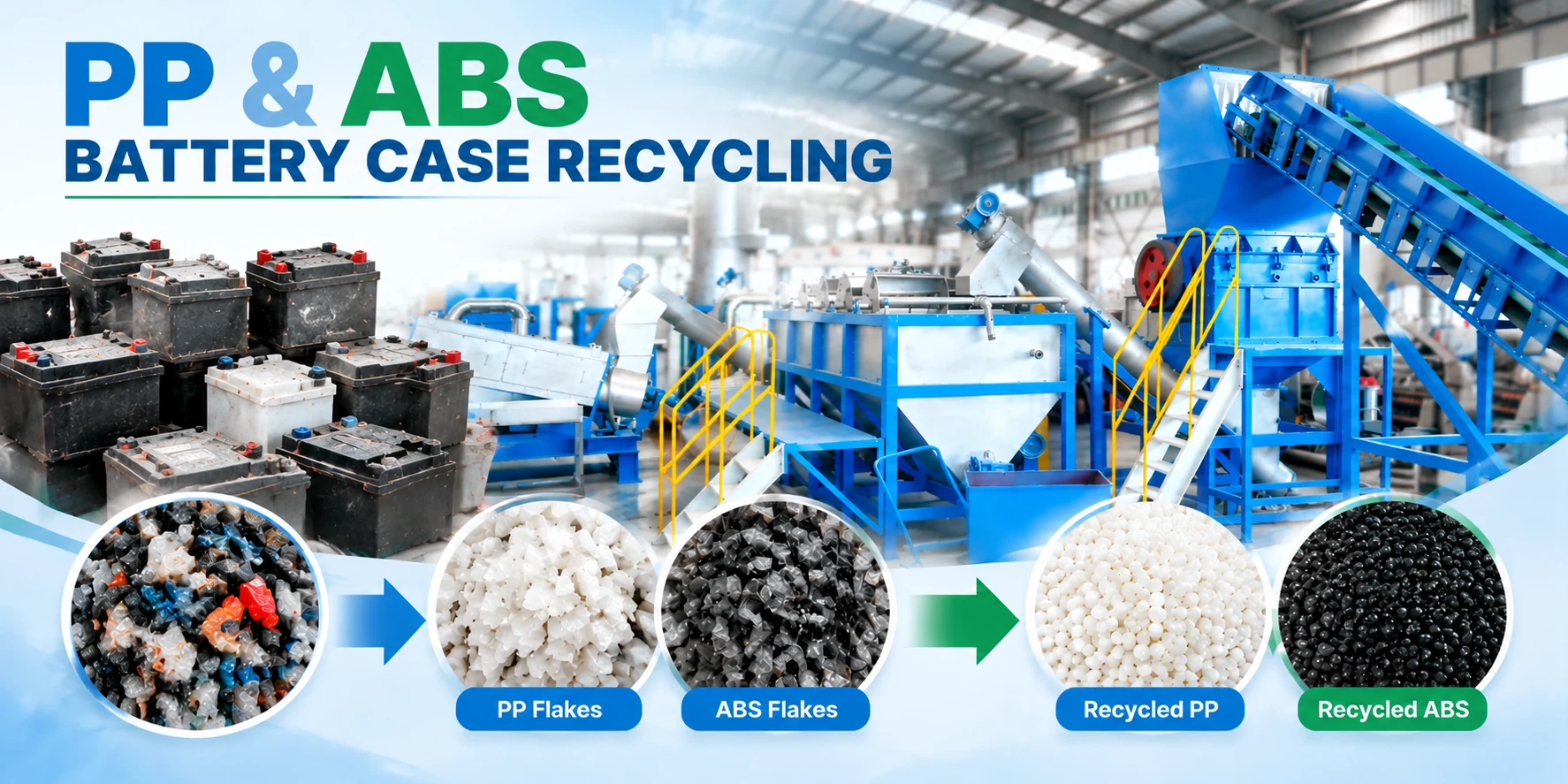
A practical guide to sorting, size reduction, washing, and high-purity plastic recovery
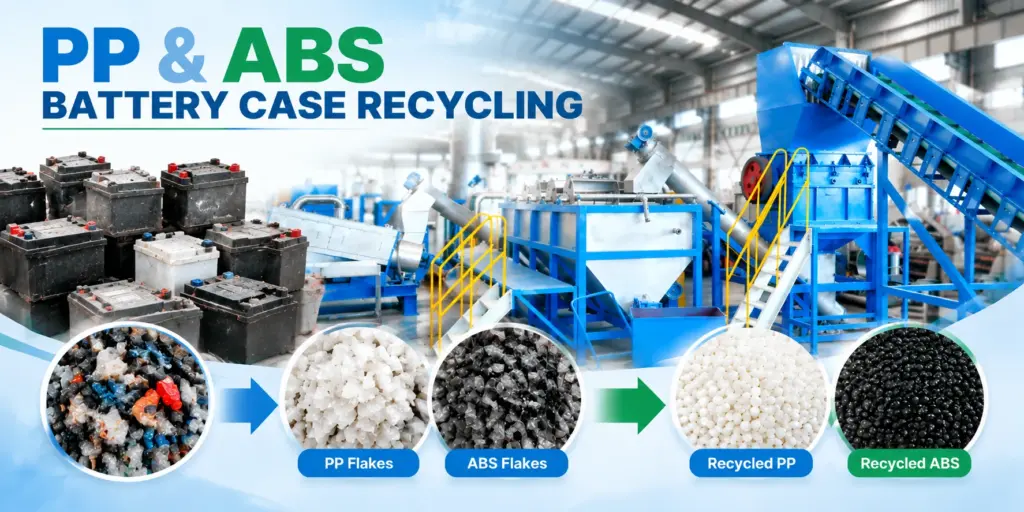
Quick answer: PP and ABS battery-case plastics can be recovered from safely pre-treated housings through size reduction, metal removal, washing, drying and polymer separation. The process must match the battery type and contamination profile. Untreated batteries must not enter a conventional plastic shredder or granulator.
Plastic battery cases are often overlooked in recycling systems that focus mainly on recovering metals. Yet, depending on the battery type and product design, the outer housing and related components may contain valuable engineering plastics such as polypropylene (PP) and acrylonitrile butadiene styrene (ABS). Recovering these plastics can reduce disposal volumes, conserve resources, and create feedstock for secondary plastic applications—provided that the material is handled safely and separated to an appropriate level of purity.
Why Recycle PP and ABS Battery Cases?
PP and ABS have different properties and are used in a range of battery housings and electrical products. PP is valued for its chemical resistance, low density, and toughness. ABS offers rigidity, impact resistance, and good dimensional stability. When these materials are recovered as clean, well-sorted fractions, they may be reprocessed into pellets or flakes for suitable non-food-contact applications, subject to material quality and regulatory requirements.
The challenge is that post-use battery casings rarely arrive as a uniform plastic stream. They may be mixed with steel terminals, copper parts, seals, labels, foam, dirt, and plastics of other types. Some housings may also contain additives or residues that affect downstream use. A recycling line therefore needs to do more than simply crush the material: it should combine safe pre-treatment, controlled size reduction, contaminant removal, and plastic sorting.
Key Challenges in Battery Case Plastic Recycling
1. Mixed materials and complex product construction
Battery cases can include attached metal parts, inserts, gaskets, labels, and other components. If these are not removed or separated effectively, they can damage cutting equipment, reduce the quality of recovered plastic, or create problems during extrusion and pelletizing. The best process depends on whether the feedstock consists of pre-separated empty cases, production scrap, or mixed post-consumer battery waste.
2. PP and ABS need to be separated
PP and ABS cannot generally be treated as one interchangeable recycled-plastic grade. Their density and physical properties differ, which can support separation using a carefully designed sink-float process. However, actual separation performance depends on the full material mix, particle size, water or solution density, and the presence of fillers, flame retardants, labels, or attached components. Trial testing is recommended before confirming a process.
3. Safety and traceability come first
Battery waste must be assessed before mechanical processing. Intact batteries, damaged cells, residual electrolyte, and other hazardous components should be handled by qualified personnel under applicable local regulations. The plastic-recycling stage should receive material only after the required discharge, dismantling, and safety checks have been completed. Do not feed live or unidentified batteries directly into a plastic shredder or granulator. For lithium-ion battery streams, the US EPA’s recycling guidance explains why controlled specialist processing and fire-risk management are necessary; the required pre-treatment also depends on battery chemistry and local rules.
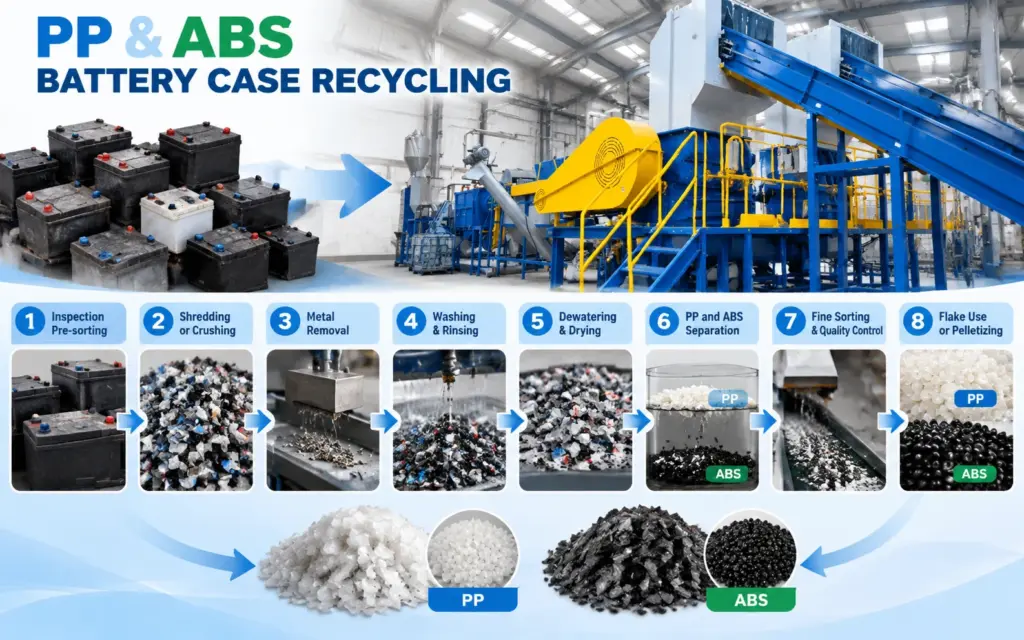
A Typical Process for Recovering PP and ABS from Battery Cases
- Inspection and pre-sorting Identify the battery type and source of the waste. Remove non-processable items and confirm that the feedstock has been made safe for mechanical treatment. Where practical, dismantle accessible metal parts before size reduction.
- Shredding or crushing Reduce the empty casings to a controlled size so that downstream washing and separation can work more consistently. A heavy-duty shredder or suitable crusher is selected according to the size, wall thickness, and toughness of the cases.
- Metal removal Use suitable magnetic separation and, where required, additional metal-separation equipment to remove ferrous and non-ferrous fragments. The configuration depends on the metals present and the required recovery level.
- Friction washing and rinsing Where dirt, labels, oils, or surface residues are present, washing equipment can help clean the plastic fragments. Water treatment and recirculation can reduce fresh-water demand, subject to the contamination profile and local discharge requirements.
- Dewatering and drying Remove surface water after washing. The required drying method depends on the target moisture level and whether the next step is flake packaging, optical/electrostatic sorting, or extrusion.
- PP and ABS separation A sink-float tank may be used to separate fractions according to density. In some material streams, PP tends to float while ABS tends to sink, but this should not be treated as a universal guarantee: fillers, additives, trapped air, and mixed polymers can change the result. Adjustments and testing are needed for the actual feedstock.
- Fine sorting and quality control Depending on the target specification, electrostatic separation, color sorting, or other sorting technologies may help improve the purity of each plastic fraction. Sampling and testing should verify polymer identity, metal content, moisture, and other customer-specific requirements.
- Flake use or pelletizing Qualified flakes may be sold as recycled feedstock or sent to a suitable pelletizing line. Final applications depend on polymer purity, degradation, odor, additive content, and relevant product regulations.
Choosing the Right Recycling Equipment
There is no single configuration that suits every battery-case recycling project. A line designed for clean, pre-dismantled PP housings may be very different from a system processing mixed PP, ABS, metal, and other plastics. Equipment selection should be based on representative samples and clear product targets.
- Feedstock: battery type, source, casing dimensions, wall thickness, and whether the material is pre-dismantled.
- Composition: expected PP/ABS ratio, metal content, other polymers, fillers, labels, and contamination.
- Capacity: required throughput in kg/h or t/h and expected operating hours.
- Output specification: target flake size, polymer purity, moisture, metal residue, color, and odor requirements.
- Utilities and site conditions: available floor space, electrical supply, water treatment, dust control, and local environmental rules.
- Safety scope: clear separation between battery-safe pre-treatment and downstream plastic recycling operations.
Environmental and Commercial Benefits
Recovering PP and ABS from suitable battery-case waste can divert plastic from landfill or incineration and reduce the demand for virgin resin. It can also create additional value from a waste stream that might otherwise be treated as a low-priority residue. The actual environmental benefit depends on collection efficiency, transport distance, sorting yield, washing-water management, energy consumption, and the quality and marketability of the recycled output.
For recyclers, the commercial objective is not simply to maximize throughput. It is to balance recovery rate, product purity, operating cost, maintenance, and the value of each recovered fraction. Proper pre-sorting and process design can reduce contamination and help produce more consistent material for downstream users.
Build a Recycling Line Around Your Material
Amstar provides plastic recycling equipment and customized process solutions for a range of rigid-plastic applications. For PP and ABS battery-case recycling, the recommended configuration should be determined after reviewing the feedstock and confirming the required output quality. Depending on the project, the process may include shredding, crushing, metal separation, washing, dewatering, drying, sink-float separation, and further sorting.
To help evaluate a suitable solution, please share photos or videos of the material, battery type and pre-treatment status, estimated capacity, contamination level, target flake size, desired PP/ABS purity, and installation location. A material assessment and trial are recommended before finalizing capacity, recovery expectations, or equipment scope.
Request a customized plastic recycling solution. Visit www.plasticrecyclingmachine.net to discuss your application.
Relevant downstream equipment may include double-shaft plastic shredders, magnetic separators and sink-float separation tanks. Use representative separation trials to assess the feedstock before specifying a production line. These equipment examples concern downstream plastic recovery, not untreated battery processing.
Common Questions
Can PP and ABS battery cases be recycled in one line?
A line can be configured to recover separate PP and ABS fractions from suitable, safely pre-treated feedstock. The required stages depend on the polymer mix, metals, contamination and target purity. This does not mean PP and ABS should be sold or processed as one interchangeable resin grade.
Will a water tank always separate PP from ABS?
No. Density separation can help, but fillers, additives, labels, trapped air and other polymers can alter the behavior of real fragments. Confirm separation performance using representative samples and output-quality testing.
What information is needed to quote a battery-case plastic recycling line?
Provide the battery type and pre-treatment status, photos or video, PP/ABS composition, contamination and metal content, hourly capacity and output specification. Identify the safety scope before selecting the downstream plastic-recycling equipment.
References
INQUIRIES
To learn more about this topic or get prices and lead times for the machinery mentioned, please send us a message using the form below.