
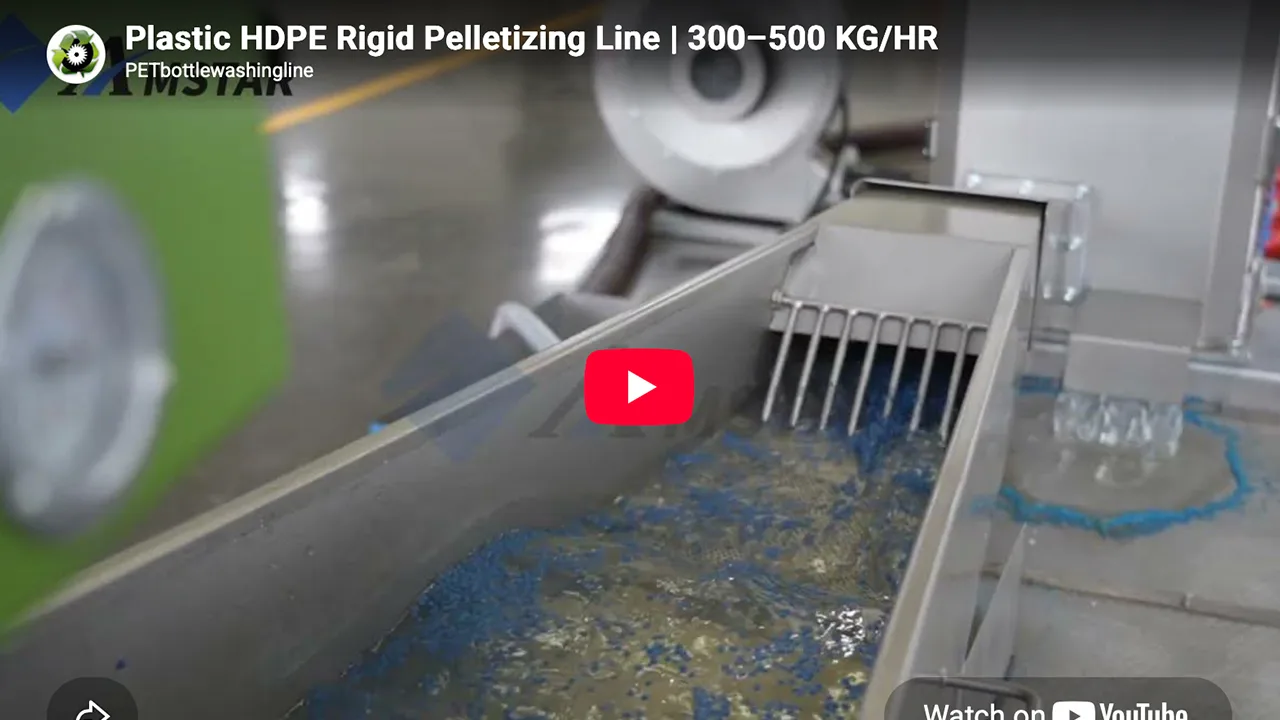
As global demand for high-quality recycled plastic continues to surge, manufacturing clean, uniform recycled High-Density Polyethylene (HDPE) pellets has become a cornerstone of sustainable plastic production. Converting crushed HDPE rigid flakes—sourced from bottles, containers, pipe scrap, and industrial regrind—into premium re-granule pellets requires stable extrusion, melt filtration, and precise pelletizing technology.
Our 300–500 kg/h Plastic HDPE Rigid Pelletizing Line offers an automated, energy-efficient solution designed specifically for recycling regrind and rigid flakes into clean, re-usable plastic raw materials.
Why Processing HDPE Rigid Flakes Requires Specialized Extrusion
HDPE rigid plastics (such as blow-molded bottles, heavy-duty crates, and thick pipes) exhibit unique flow characteristics and melt temperatures compared to flexible films. Key challenges in processing rigid HDPE flakes include:
- Feeding Consistency: Flakes and regrind can vary in bulk density, leading to unstable feeding in standard extruders.
- Impurity Contamination: Residual contaminants and non-melt materials must be efficiently filtered out without stopping production.
- Pellet Uniformity: Irregular pellet sizes affect downstream injection molding and blow molding processes.
An optimized HDPE pelletizing system combines automated volumetric/force feeding, continuous melt filtration, and a dedicated water-ring cutting system to ensure consistent pellet output.
Step-by-Step Breakdown of the HDPE Pelletizing Process
Our complete 300–500 kg/h HDPE rigid plastic pelletizing machine operates as an automated, continuous line to deliver high-density, uniform pellets.
+------------------+      +-------------------+      +-----------------------+
|  Screw Conveyor  | ---> |  Automatic Feeder | ---> | 100 mm Single-Screw   |
|  (Raw Regrind)   |      | (Dosing System)   |      | Extruder (L/D 30:1)   |
+------------------+      +-------------------+      +-----------------------+
                                                                 |
                                                                 v
+------------------+      +-------------------+      +-----------------------+
| Transit Storage  | <--- | Water-Ring Cutting| <--- | Hydraulic Non-Stop    |
| Silo / Packing   |      | & Cooling System  |      | Screen Changer        |
+------------------+      +-------------------+      +-----------------------+
1. Automated Feeding & Conveying
- Screw Conveyor & Automatic Feeder: Clean HDPE rigid flakes are automatically conveyed into the main feed hopper. The continuous dosing mechanism prevents feeding surges and ensures a constant material volume enters the screw barrel.
2. Homogeneous Plasticization & Degassing
- 100 mm Single-Screw Extruder (L/D 30:1): The heavy-duty single-screw extruder features precise multi-zone temperature controls. With an optimized L/D ratio of 30:1, the material achieves complete plasticization, thorough melting, and uniform melt pressure while preserving the physical properties of the HDPE polymer.
3. Continuous Melt Filtration
- Hydraulic Screen Changer: Before the molten plastic reaches the die head, it passes through a hydraulic screen changer. This system filters out microscopic impurities and solid particles without interrupting continuous extrusion.
4. Water-Ring Pelletizing & Cooling
- Water-Ring Cutting System: The filtered melt is extruded through a circular die face where rotating blades slice the molten streams into precise pellets. The hot pellets immediately enter a high-velocity water ring for instant cooling, preventing agglomeration.
- Drying & Silo Storage: The water-pellet mixture passes through a centrifugal dewatering dryer to strip away surface moisture before pneumatic transport to the storage silo for packaging.
Core Equipment Components & Technical Specifications
| Equipment Component | Technical Function & Specification |
| Material Intake | Heavy-Duty Screw Conveyor & Automatic Feeder |
| Main Extruder | 100 mm Single-Screw Extruder (L/D Ratio 30:1) |
| Melt Filtration | High-Pressure Hydraulic Plate / Piston Screen Changer |
| Pelletizing Unit | Die-Face Water-Ring Cutting System |
| Cooling & Drying | Stainless Steel Water Channel & Centrifugal Dewatering Machine |
| System Control | Centralized Electrical Control Cabinet (PLC / Inverter Drive) |
| Processing Capacity | 300 – 500 kg/h (depending on flake bulk density) |
| Applicable Materials | Crushed HDPE containers, rigid flakes, bottles, pipe regrind |
Key Benefits for Plastic Recycling Operations
- Stable Extrusion Performance: Designed with a 300–500 kg/h capacity, the line maintains stable melt pressure and throughput across long production runs.
- Exceptional Pellet Quality: Water-ring face cutting yields smooth, cylindrical, high-density pellets ideal for extrusion, injection molding, or blow molding applications.
- Low Labor & High Automation: Automated feeding, continuous screen changing, and pneumatic pellet conveyance enable operation with minimal staff supervision.
- Energy-Efficient Heating & Drives: High-efficiency heating bands and variable frequency drives reduce overall kilowatt consumption per ton of recycled plastic produced.
Upgrade Your HDPE Recycling Line Today
Whether you are expanding your post-consumer washing and pelletizing plant or processing internal post-industrial scrap, our 300–500 kg/h HDPE Rigid Pelletizing Line delivers the durability, output quality, and operational reliability your facility needs.
Frequently Asked Questions
The line processes 300–500 kg/h of crushed HDPE flakes, with actual output depending on flake bulk density. It accepts crushed HDPE containers, rigid flakes, bottles, and pipe regrind and runs as an automated, continuous line producing high-density, uniform pellets.
The main extruder is a 100 mm single-screw extruder with a 30:1 L/D ratio, fed by a heavy-duty screw conveyor and automatic feeder. Melt filtration is handled by a high-pressure hydraulic plate or piston screen changer ahead of the pelletizing unit.
A die-face water-ring cutting system pelletizes the melt, after which a stainless steel water channel cools the pellets and a centrifugal dewatering machine removes the water. The process is engineered to deliver high-density, uniform pellets in continuous operation.
Rigid HDPE from blow-molded bottles, heavy-duty crates, and thick pipes has different flow characteristics and melt temperatures than flexible film. The system therefore combines automated volumetric or force feeding, continuous melt filtration, and a dedicated water-ring cutting system for consistent pellet output.
A centralized electrical control cabinet with PLC and inverter drive manages the whole line. It runs as an automated, continuous process from feeding and conveying through homogeneous plasticization and degassing, continuous melt filtration, water-ring pelletizing, and water cooling.
Inquiries
To get the latest prices and lead times, send us a message using the form below.