
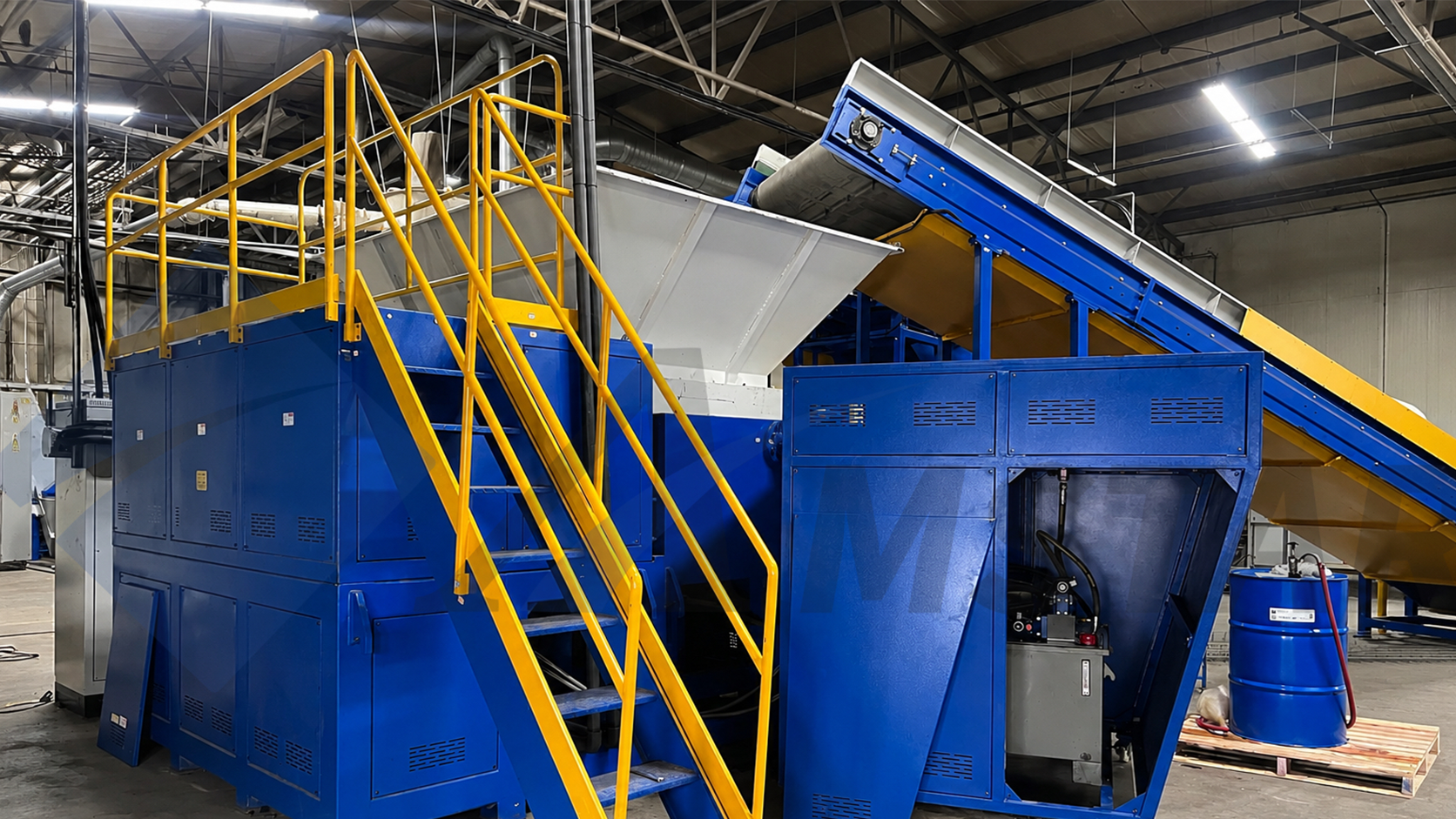
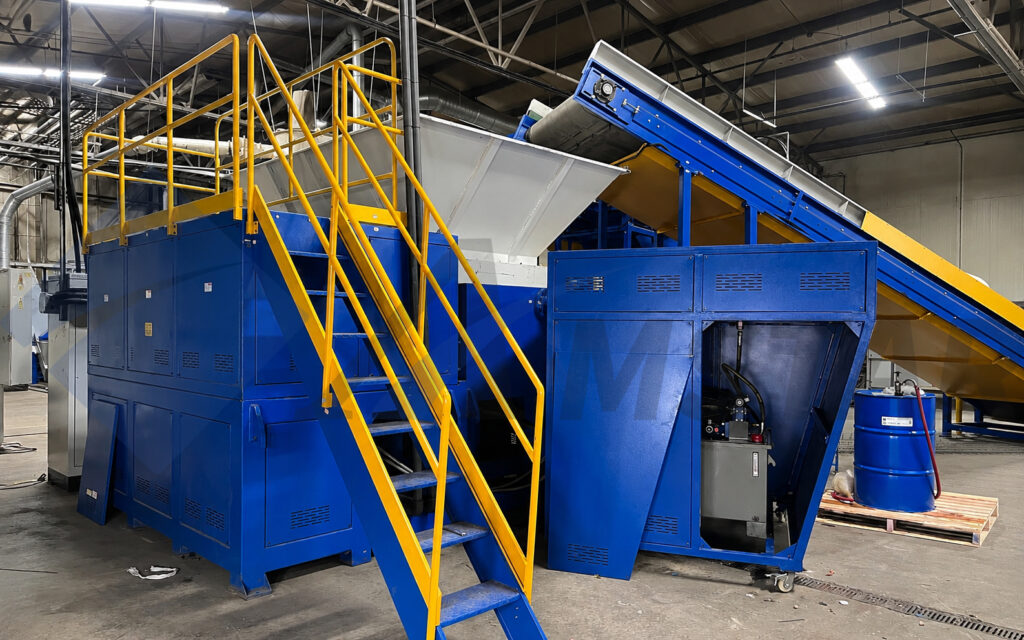
When sourcing industrial recycling equipment, it is common to see significant price disparities between seemingly identical machinery. Two “1000-model” plastic shredder machines may carry vastly different price tags across suppliers.
However, a model designation typically indicates physical chamber dimensions or shaft length—it does not reflect internal engineering, component quality, or long-term durability. While an economy machine may offer a lower upfront purchase price, an industrial shredder is a capital investment where total cost of ownership (TCO) is driven by operational efficiency, maintenance, and downtime.
1. Core Component Breakdown: Where the Cost Differences Lie
The true value of an industrial plastic shredder lies in its internal mechanical and electrical engineering.
Rotor Shaft Engineering
The rotor shaft serves as the primary structural backbone of the machine, handling extreme torque and impact loads.
| Specification | Premium Grade | Economy Grade |
| Base Material | Forged alloy steel | Standard carbon steel |
| Heat Treatment | Multi-stage stress relief & hardening | Basic surface hardening |
| Operational Impact | Minimal flex, reduced bearing wear, extended service life | Higher vibration, potential shaft deflection, higher downtime risks |
Cutting Knives & Wear Resistance
Blade composition directly dictates throughput efficiency, energy consumption, and maintenance frequency. Learn more about our specialized plastic recycling blade and knife options.
| Specification | Premium Knives | Standard Knives |
| Material Composition | High-alloy tool steel (e.g., D2/SKD11) | Conventional steel grades |
| Wear Characteristics | Superior edge retention, high impact resistance | Moderate resistance, fast dulling |
| Maintenance Burden | Extended intervals between sharpening/replacement | Frequent sharpening required, increasing maintenance labor |
Drive System: Gearbox & Motor Integrations
The power transmission system governs daily energy consumption and operational reliability.
| Specification | Heavy-Duty Industrial Standard | Basic/Standard Grade |
| Gearbox Class | Reinforced, high-torque industrial gear reducers | Standard light-to-medium duty reducers |
| Electric Motor | Premium-efficiency (IE3/IE4) branded motors | Generic or unbranded efficiency motors |
| Performance Impact | Lower thermal output, higher energy efficiency, high reliability | Higher power draw, increased risk of mechanical wear under heavy loads |
2. Application-Specific Shaft & Rotor Configuration
A standard, off-the-shelf shredder configuration cannot efficiently process all polymer types. Customizing machine configurations to match specific material characteristics prevents feed jamming, shaft wrapping, and excessive wear.
- Plastic Film & Stretch Wrap: Requires anti-wrapping rotor designs and specialized geometry to prevent material binding around the shaft.
- HDPE Drums & Hollow Containers: Benefits from high-torque, counter-rotating dual shafts designed to bite into smooth, rounded surfaces.
- Plastic Pallets & Purgings: Demands heavy-duty drive systems, reinforced steel housings, and shock-absorbing drive mounts.
- Woven Bags & Raffia: Utilizes optimized knife shearing angles to ensure clean cutting rather than tearing.
- Thick-Walled Plastic Pipes: Requires heavy-duty rotors paired with hydraulic ram feeders for continuous cutting force.
3. Total Cost of Ownership: Purchase Price vs. Lifetime Value
Evaluating recycling equipment based solely on capital expenditure (CAPEX) overlooks ongoing operational expenditures (OPEX).
| Evaluation Factor | Low CAPEX Machine | High-Efficiency Industrial Machine |
| Initial Purchase Cost | Lower upfront investment | Moderate to higher initial investment |
| Maintenance & Spares | Frequent blade re-grinding and part replacements | Extended component lifespans, minimal emergency maintenance |
| Energy Consumption | Higher kWh consumption per ton processed | Optimized motor efficiency reducing power draw per ton |
| Unplanned Downtime | Higher risk of operational stoppages | Continuous, stable operation for multi-shift production |
| Overall Cost / Ton | Higher long-term processing cost | Significantly lower lifetime operating cost |
Key Questions Before Purchasing a Plastic Shredder
To ensure your machinery investment matches your operational requirements, evaluate these parameters prior to purchasing:
- Material Profile: What specific polymers, wall thicknesses, or moisture levels will you process?
- Duty Cycle: Will the machine operate continuously (24/7) or in batch shifts?
- Throughput Targets: What hourly output capacity (kg/hr or lbs/hr) is required?
- After-Sales Support: Does the supplier provide quick-ship spare parts, engineering assistance, and technical services?
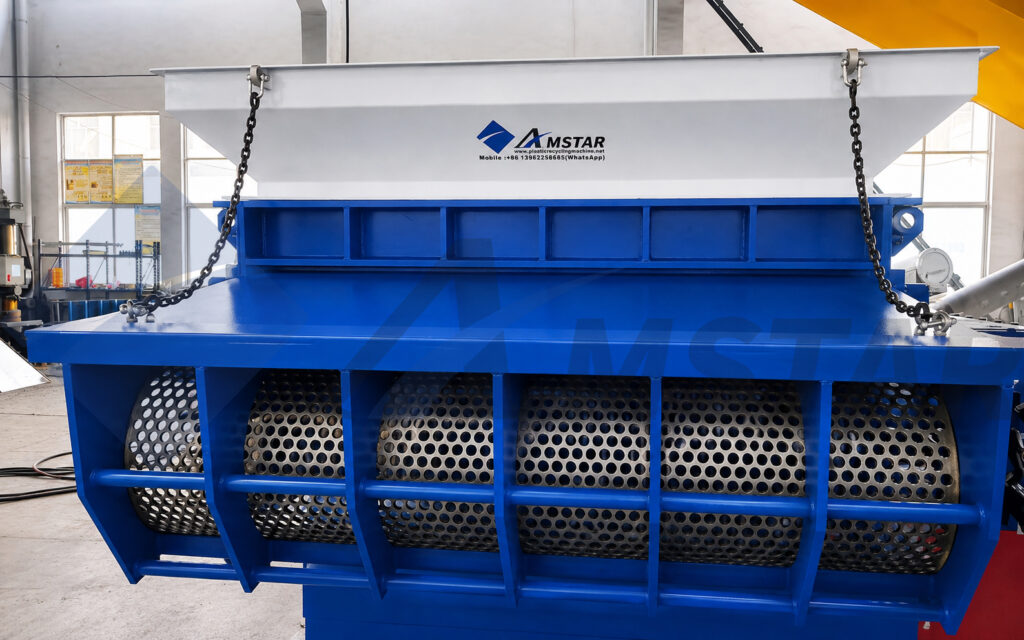
Industrial Shredding Solutions by Amstar
At Amstar, we design and manufacture high-performance plastic recycling machinery engineered for demanding industrial environments.
- Heavy-Duty Construction: Built with reinforced steel frames and forged alloy components.
- Tailored Engineering: Custom rotor configurations tailored to your specific plastic scrap type.
- Operational Stability: Reliable components built for multi-shift, continuous processing.
- Technical Support: Dedicated support and spare parts assistance to maximize facility uptime.
Inquiries
To get the latest prices and lead times, send us a message using the form below.